Ready for a Change? 8 Low-Maintenance Backyard Ideas That Work in Every Season
Published Date: Oct 28, 2026
It's easy to think of your backyard as a summer-only space. The patio furniture gets covered, the grill gets used less often, and the lawn becomes one more thing to clean up after a stretch of rain or under blanket of fallen leaves.
But what if your outdoors could be beautiful, functional, and ready to enjoy no matter what the calendar says? When you relegate your yard to summer only, you end up missing out on some of the most enjoyable outdoor days of the year!
With the right materials and a little planning, a low-maintenance backyard can do more than look simply look good in the summer. It can provide a welcoming place to get together with friends around the fire pit, enjoy soaking up some vitamin D outdoors in winter, or host friends for an impromptu dinner when that first balmy spring breeze blows in. Best of all, when warmer weather returns, you won't have to spend weeks catching up on repairs and yardwork before you're ready to enjoy it.
The secret is designing for the way you actually live, across every season. Durable surfaces, weather-resistant outdoor living features, smart drainage, and thoughtful layouts can help create a backyard that stays attractive and usable without demanding constant attention.
Ready to rethink your outdoor space? Here are eight low-maintenance backyard ideas that can make every season a little more enjoyable.

First, What Makes a Backyard Truly Low-Maintenance?
A low-maintenance backyard isn't necessarily one without plants, greenery, or personal touches. It's a space designed to minimize repetitive chores, resist everyday wear, and remain functional as weather conditions change.
That might mean replacing a consistently muddy patch of grass with artificial turf, choosing pavers instead of dealing with a lumpy lawn, or adding a covered gathering area that protects outdoor furniture from the elements.
The best backyard renovation ideas also consider the details you might not notice on a sunny day: where rainwater flows, how much direct sunlight a surface receives in winter, whether a walkway becomes slippery when wet, and how easy it is to clean up after entertaining.
Think of low maintenance as a design decision, not just a material choice. When each element works together, your backyard simply becomes an extension of your indoor living space and not something that’s another chore on your to-do list.
1. Upgrade to a Paver Patio That Can Handle Everyday Life
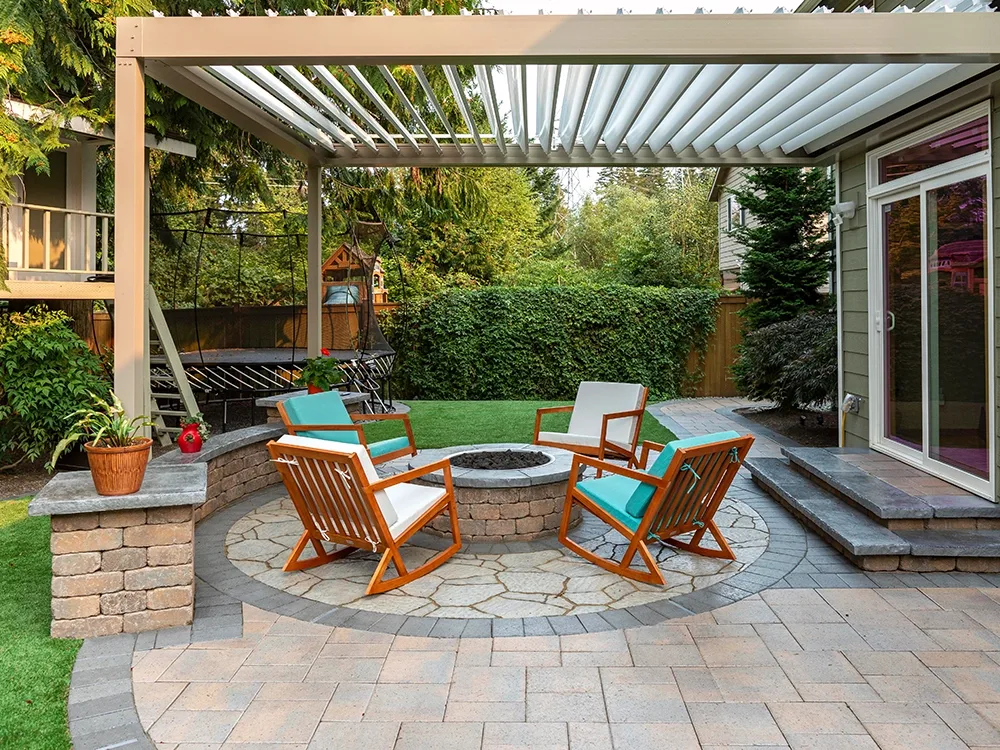
A patio is often the foundation of an outdoor living space. It's where you arrange the furniture, gather for meals, set up a fire feature, and create a natural transition between your indoor and outdoor spaces. Choosing a durable surface from the start can make a meaningful difference in how much upkeep your backyard requires.
Interlocking pavers are a popular option for homeowners who want an attractive, durable patio without the maintenance demands associated with some other surfaces.
Unlike a large, continuous concrete slab, an interlocking paver patio consists of individual paving stones. This construction allows the surface to accommodate some ground movement, depending on the installation and site conditions, rather than relying on one uninterrupted slab. Individual pavers can also be replaced if a particular section becomes damaged.
Pavers offer plenty of design flexibility, too. Choose warm, natural-looking tones for a cozy fall retreat, clean contemporary lines for a modern outdoor living space, or a classic pattern that complements your home's architecture. A well-planned patio can look just as inviting beneath colorful autumn leaves as it does under the summer sun.
For even easier upkeep, consider how you'll use the space before settling on a layout. Leave enough room for furniture to move comfortably, create clear paths between activity areas, and choose colors and textures that complement your home's exterior.
Why a paver patio works year-round: A professionally installed paver patio provides a durable foundation for outdoor dining, entertaining, and relaxing across seasons. Proper base preparation, joint materials, and drainage are essential to long-term performance.
2. Replace High-Maintenance Grass With Artificial Turf

Natural grass can be beautiful, but keeping it that way takes work. Mowing, watering, fertilizing, reseeding, and managing muddy or worn patches can quickly turn a backyard into a weekend chore.
Artificial turf offers another option for homeowners who want a consistently green lawn all year long. This even applies in the winter months when the neighbors’ yards look brown and dreary.
Professionally installed synthetic turf can provide a neat, inviting appearance through changing seasons, with no routine mowing or lawn watering required. It's particularly useful in areas where grass struggles to grow, along frequently used paths, or in backyards where kids and pets need room to play.
It can also make entertaining easier. Instead of worrying about muddy footprints tracking into the house after a rainy stretch, you'll have a more predictable surface for everyday use. Leaves and other debris can generally be removed with a leaf blower or suitable rake, while occasional rinsing helps keep the area clean.
For homeowners interested in a more drought-friendly backyard, artificial turf can also reduce outdoor irrigation needs. System Pavers' System Turf® is designed to provide a low-maintenance lawn with toxin-free, PFAS-free materials and antimicrobial properties.
One important consideration: artificial turf still needs appropriate installation. The base, drainage, and intended use all matter, especially in climates with heavy rain or seasonal temperature extremes.
Why synthetic turf works year-round: Turf maintains a green appearance without seasonal mowing or reseeding, giving your backyard a tidy look even when surrounding natural lawns turn dormant.
3. Design an Outdoor Kitchen for More Than Summer Grilling

An outdoor kitchen can make backyard entertaining easier, but its value doesn't have to end when “official” barbecue season does.
With the right layout and weather-conscious materials, an outdoor kitchen can become a practical extension of your home throughout much of the year. Imagine preparing Thanksgiving dinner while guests sip drinks outdoors, enjoying a weekend lunch outside, or hosting a fall get-together without constantly running between the indoor kitchen and the patio.
Start with a functional layout. Position cooking, food preparation, and serving areas so that everything is within easy reach. Choose durable, outdoor-rated finishes that are appropriate for your climate, and plan storage to keep cooking tools and accessories organized when they're not in use.
Protection from the elements is equally important. Depending on the design and local conditions, a pergola, patio cover, or other suitable overhead structure can provide shade and help protect parts of the kitchen from direct sun and rain. Appliances and cabinetry should be selected for outdoor use, and plumbing and gas connections must comply with local codes.
For cooler months, consider the relationship between the kitchen and nearby seating. A fire feature, comfortable lounge area, patio heater, or sheltered dining space can help guests stay engaged while food is being prepared.
You don't have to build a sprawling kitchen to make a difference. Even a compact BBQ island with adequate counter space can help simplify outdoor meals in any season.
Why outdoor kitchens work year-round: A thoughtfully planned outdoor kitchen makes entertaining more convenient across seasons, particularly when cooking and dining areas are designed around local weather and the way you use your backyard.
4. Add a Fire Feature to Make Cool Evenings More Inviting

When temperatures drop, a fire feature can turn an otherwise chilly patio into the perfect place to unwind. It's one of the simplest ways to make your backyard feel like a destination long after summer ends.
A built-in gas fire pit creates a natural gathering point, whether you're hosting friends, enjoying a quiet evening outside, or spending time with family on a crisp autumn night. Unlike a portable feature that needs to be moved or stored, a permanent fire pit can be integrated into your patio design, surrounded by comfortable seating and complementary hardscape materials.
For an especially cohesive look, incorporate the fire feature into a paver patio with a built-in seating wall. This combination creates a defined gathering area without requiring an elaborate arrangement of outdoor furniture. You can also use landscape lighting to illuminate nearby walkways and add a warm glow after sunset.
Gas fire features can be convenient to operate, although the amount of care required depends on the specific appliance and its installation. Keep the burner area clear of leaves and debris, follow manufacturer maintenance instructions, and ensure the feature is installed with appropriate clearances and ventilation.
Why fire features work year-round: A fire pit or fireplace create a comfortable focal point for fall and winter gatherings while remaining an attractive backyard feature during warmer months.
5. Add a Pergola or Patio Cover for Shade and Weather Protection

A beautiful patio is more enjoyable when you have some control over the elements. Depending on your climate and the structure you choose, a pergola or patio cover can help make your outdoor living space more comfortable throughout the year.
During summer, overhead shade can make it easier to enjoy lunch outside or relax with a book without sitting in direct sunlight. In fall and winter, an appropriately designed cover can offer shelter from light rain and help define a more intimate outdoor gathering area.
Pergolas typically feature an open or partially open overhead structure, while patio covers may provide more substantial protection from sun and precipitation. The right choice depends on how much coverage you want, your local weather, and the architectural style of your home.
Think beyond the structure itself. Position seating to take advantage of shade at the times you'll use it most. Consider outdoor lighting for shorter days, and plan for furniture and accessories that can withstand the conditions in your area.
If your goal is to use the space in cooler weather, a covered patio can also provide a practical home for an outdoor dining table, patio heater, or an outdoor grilling area. Just remember that a cover alone won't make a space weatherproof. Wind-driven rain, cold temperatures, and moisture can still affect your comfort and furnishings.
It's also important to choose a structure designed for local wind, rain, and snow loads, with any required permits and appropriate drainage.
Why pergolas work year-round: Shade and overhead protection can make an outdoor living space more comfortable and useful in changing weather, helping your patio serve as an extension of your home rather than a fair-weather retreat.
6. Plan for Drainage Before Water Becomes a Problem

Of all the elements that make a backyard low-maintenance, drainage may be the least glamorous—and one of the most important.
A patio can look beautiful on a sunny afternoon, but the real test comes after a heavy rain. Water that collects near the house, pools on walking surfaces, or saturates areas of the yard can create ongoing maintenance issues. Depending on the conditions, poor drainage may also contribute to erosion, shifting hardscape, muddy lawns, and damage to nearby structures.
That's why a successful backyard renovation should account for water movement from the beginning.
A few important considerations include:
• Proper grading: The ground should be shaped to direct water away from the home's foundation and toward appropriate drainage areas.
• A well-prepared paver base: Proper excavation, base materials, compaction, and installation help support the surface and reduce the risk of uneven settling.
• Drainage around turf: Artificial turf requires a properly prepared base and suitable drainage provisions so water can move through the system rather than collect beneath the surface.
• Downspout placement: Roof runoff should be directed appropriately instead of being allowed to erode the patio edge or create muddy spots.
• Transitions between surfaces: Where pavers, turf, decking, and planting areas meet, the design should account for changes in elevation and how water will move between them.
If your yard already has standing water or recurring muddy patches, identify the cause before installing a new surface. The right solution might involve regrading, a drain, adjustments to downspouts, or a combination of improvements.
Keep in mind that drainage requirements vary by property, soil type, slope, and climate. Significant water problems may require professional assessment.
Why drainage works year-round: Good drainage helps protect your investment, keeps outdoor areas cleaner after rain, and makes walkways, patios, and lawn areas more practical during wet seasons.
7. Make Outdoor Lighting Part of the Original Design

As the days grow shorter, outdoor lighting becomes more than a decorative finishing touch. It helps your backyard remain inviting and functional when the sun sets earlier.
Well-planned outdoor landscape lighting can highlight architectural features, illuminate pathways, and create a welcoming atmosphere for evening gatherings. It can also make navigating steps and changes in elevation easier when natural light is limited.
The key is to think about lighting in layers.
Pathway lighting helps illuminate routes between the house, patio, driveway, and other frequently used areas. Accent lighting highlights trees, architectural details, retaining walls, or attractive paver patterns. Ambient lighting around dining and seating areas creates a softer atmosphere for relaxing and entertaining.
You can also incorporate lighting into a covered patio or outdoor kitchen, making it easier to prepare food and enjoy meals after dark.
For a cohesive result, consider lighting placement during the initial design rather than adding fixtures as an afterthought. That allows electrical connections, fixture locations, and the overall layout to work together.
Choose outdoor-rated fixtures and appropriate controls, and consider energy-efficient LED options. Timers, photocells, or smart controls can help lights operate when needed without requiring you to remember to switch everything on and off.
Avoid excessive brightness. A few strategically placed fixtures often create a more attractive effect than illuminating every corner of the yard.
Why landscape lighting works year-round: Outdoor lighting extends the usable hours of your backyard, highlights your investment in every season, and helps create a warm, welcoming setting for evening entertaining.
8. Choose Weather-Resistant Materials and a Layout That Makes Sense

The final piece of a low-maintenance backyard is making sure all the elements work together.
Even durable individual products can become a source of frustration when they're poorly suited to the local climate or installed without considering how the space will be used. A better approach is to evaluate the backyard as a complete outdoor living environment.
Start with the conditions your yard experiences throughout the year.
• Sun and heat: Look for UV-resistant materials and finishes suited to your climate. Surface color can also affect heat absorption, particularly on patios and decks exposed to direct sunlight.
• Rain and humidity: Prioritize appropriate drainage, outdoor-rated materials, and products designed to handle moisture. Keep furniture and accessories clean and allow them to dry as recommended.
• Cold and temperature changes: Choose materials suited to your local freeze-thaw conditions, if applicable. Proper installation and drainage are particularly important where water may freeze beneath or between hardscape elements.
• Leaves, pollen, and everyday debris: Arrange seating and cooking areas so they are easy to sweep or rinse. Consider how nearby trees (dripping sap or constantly shedding leaves?) and planting beds will affect cleaning.
• Frequent foot traffic: Use durable surfaces for main walkways, entrances, and connections between activity areas. Plan enough room for people to move comfortably around furniture and cooking zones.
Layout matters just as much as material selection. Instead of creating one large, undifferentiated backyard, consider dividing the space into functional zones: a dining area, a place to relax around a fire pit, an open turf lawn, or a dedicated outdoor kitchen.
Combining materials can help define these areas naturally. For example, a paver patio can connect to an artificial turf lawn, while composite decking creates a separate elevated lounge or dining area. Each surface serves a purpose, and the overall design feels intentional.
If all of this sounds overwhelming, no worries! This is where your local outdoor remodeling expert is invaluable. Working with an experienced outdoor designer means all of these issues will be thought of long before that first paver is put into the ground.
And, you don't have to renovate the entire yard at once, either. Start with the part that creates the most work or limits how you use your outdoor space. A new patio, a turf lawn, or improved drainage can be a meaningful first step toward a more functional backyard.
Why thoughtful design works year-round: A coordinated design helps materials, surfaces, and features complement one another while reducing avoidable maintenance and making the space easier to use in changing weather.
How to Create a Low-Maintenance Backyard for All Seasons

The best low-maintenance backyard ideas aren't simply about choosing products that require less care. They're about creating a space that fits your lifestyle, responds to your local climate, and continues to look good as the seasons change.
Before starting your backyard renovation, ask yourself a few questions:
• What takes the most time to maintain? Identify recurring chores such as mowing, staining a deck, cleaning muddy areas, or repairing a worn patio.
• Where does weather create problems? Look for standing water, areas with little shade, surfaces exposed to harsh sun, and places where wind or rain limits how you use the yard.
• How do you want to use the space in cooler weather? Consider fire features, covered seating, outdoor lighting, and convenient access to the house.
• Which materials make the most sense for your climate? Compare maintenance requirements, durability, warranties, and installation needs before choosing products.
• What would make entertaining easier? Think about outdoor dining, cooking areas, clear walkways, comfortable seating, and surfaces that are easy to clean.
• Can your design adapt over time? Choose a layout that allows you to add features or update furnishings without reworking the entire backyard.
It's also worth remembering that low-maintenance doesn't mean maintenance-free. Pavers may need occasional sweeping, turf needs periodic cleaning, outdoor kitchens benefit from routine upkeep, and appliances require care. The goal is to reduce recurring work or tasks that can be solved with the right planning.
A thoughtful design can make those small chores more manageable while helping your backyard remain a place you genuinely want to spend time.
Make Every Season a Good Season to Be Outside

Your backyard doesn't have to go into hibernation when summer ends. With durable surfaces, smart drainage, comfortable gathering areas, and weather-resistant materials, you can create an outdoor living space that looks polished and works hard throughout the year.
Whether you're dreaming of a paver patio that stays ready for entertaining, an artificial turf lawn that needs less attention, or a fire feature that brings everyone outside on crisp evenings, the right improvements can make a noticeable difference in how you enjoy your home.
At System Pavers, we bring together outdoor design, quality materials, professional installation, and project management to help homeowners create outdoor spaces that fit their lives. Since 1992, we've helped more than 100,000 homeowners transform their yards into beautiful, functional places to gather, relax, and enjoy.
Ready to create a backyard you'll love in every season? Schedule a free, no-obligation design consultation with System Pavers. We'll help you explore ideas, materials, and a personalized plan for making more of your outdoor space—whatever the weather brings.