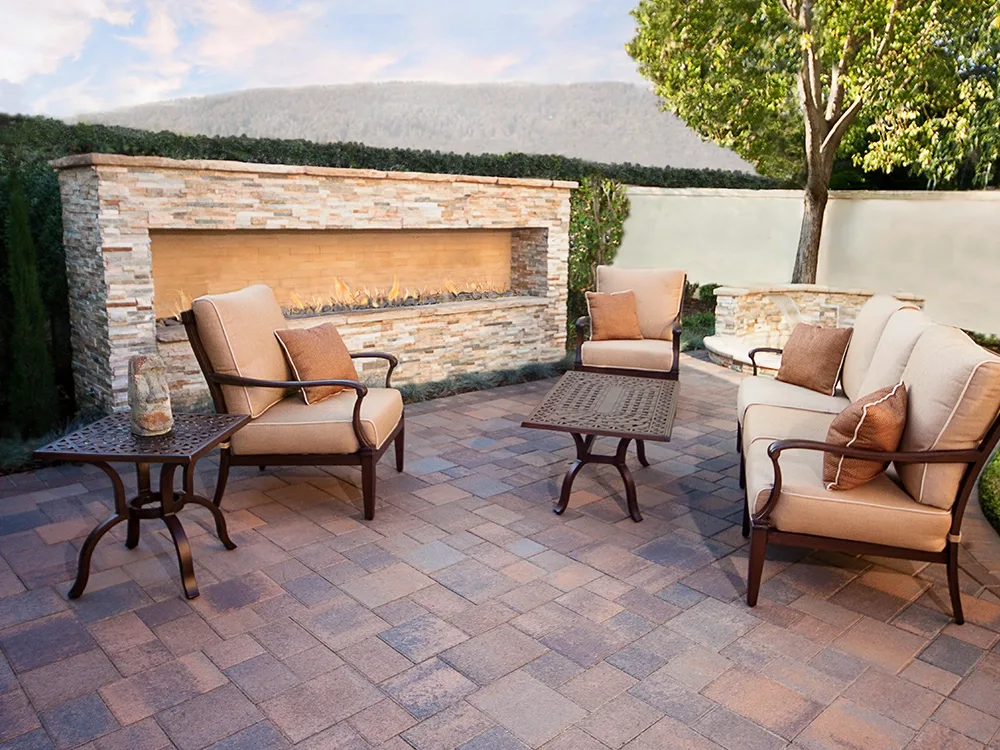
Patio Ideas to Elevate Your Backyard
Published Date: Apr 3, 2026
Patio Ideas to Elevate Your Backyard
Patios give you a stable surface for furniture, a designated spot for grilling and dining, and a reason to actually use your backyard. The right design accommodates how your family lives outdoors, whether that means room for six dinner guests or a quiet corner with two chairs. These ideas cover materials, layouts, and features that make patios functional and worth the investment.
Key Takeaways
Patios serve as the foundation for outdoor living, offering space for dining, entertaining, and unwinding.
Pavers provide durability and design flexibility compared to poured concrete.
Climate considerations and lifestyle needs should guide your material and layout choices.
Professional installation ensures proper drainage, longevity, and a polished finish that elevates your entire property.
Backyard Patio Ideas for Every Home Style
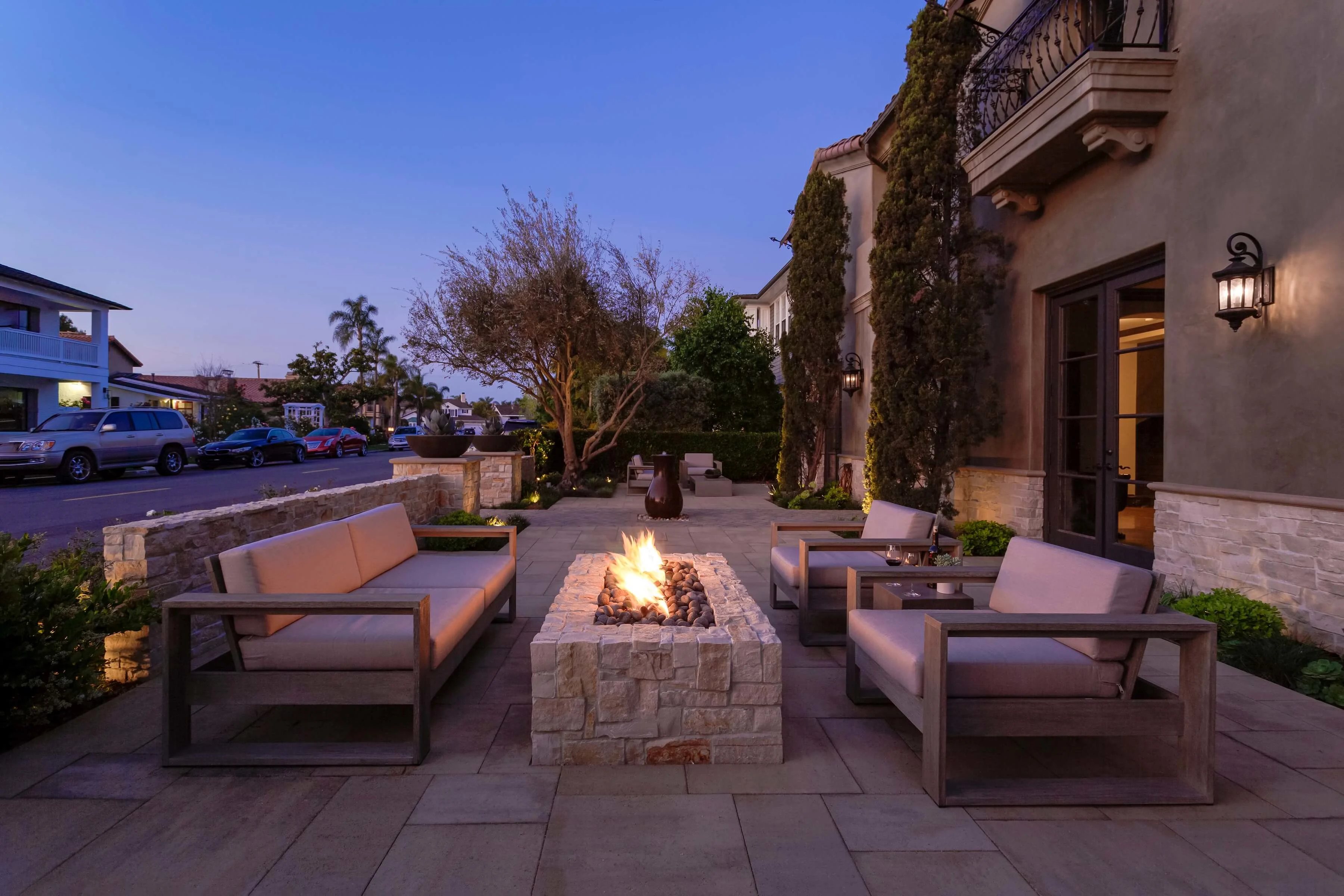
The best backyard patios reflect your home's architecture while meeting your needs. An open-concept design creates space for large gatherings and for all your backyard furniture. This works well for families who love backyard entertaining and want room to move freely between cooking, dining, and socializing areas.
Cozy patios suit homeowners who prioritize intimate settings. A small patio can still accommodate comfortable seating, container gardens, and ambient features like a fire pit. This style brings warmth and character without overwhelming modest yards.
Multi-zone patios divide your outdoor space into distinct areas for different activities, like:
Dining zones with space for tables and grills
Lounging areas with deep seating and shade
Fire features that anchor evening relaxation
Play spaces that keep children visible and safe
These zones help your entire backyard feel purposeful. Overall, patios enhance usability for your entire backyard.
Back Patio Ideas That Extend Your Living Space
Your back patio bridges the gap between indoor comfort and outdoor freedom. Covered patios shelter furniture from weather and create usable space year-round, while uncovered designs let you bask in full sunlight and stargaze after dark. Many homeowners combine both options with partial coverage that balances protection and openness.
Seamless transitions matter when you want your patio to feel like a true extension of your home. French doors, sliding glass walls, and consistent flooring materials help establish this.
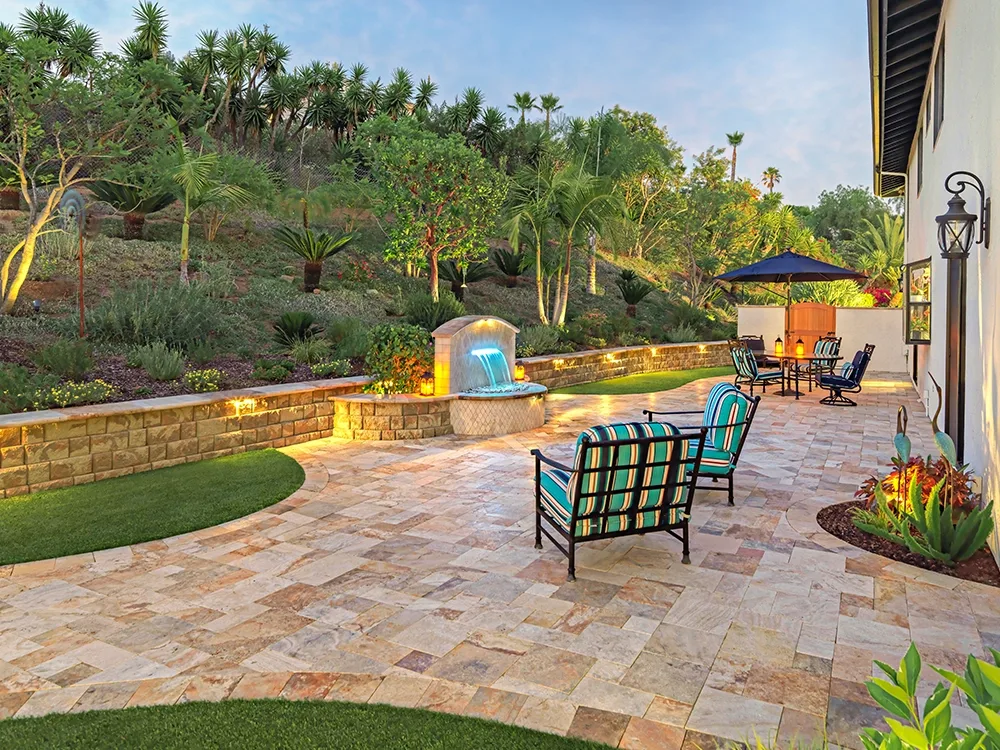
Patios can also frame views or complement existing features like pools and gardens. Position your seating to capture sunset vistas, mountain backdrops, or lush landscaping.

Additionally, outdoor lighting extends your patio's usefulness.
When choosing where to place outdoor lights, consider:
Path lights for safe movement after sunset
Uplighting to highlight architectural details and plants
String lights for festive ambiance during gatherings
Paver Patio Ideas That Combine Beauty and Durability
Individual pavers outperform poured concrete in nearly every category. They resist cracking because they move independently with ground shifts. Repairs to patio pavers also require replacing only individual pavers rather than entire slabs.
Popular paver patterns each bring distinct visual effects. For example:
Herringbone creates dynamic zigzag movement and strength
Running bond offers classic simplicity with offset rows
Random ashlar mimics natural stone
Basketweave presents a traditional woven appearance
Color selection influences how your patio relates to your home's exterior. Warm earth tones in brown and tan create inviting, natural settings. Cool grays and charcoals deliver contemporary sophistication and multicolored blends add depth and hide dirt.
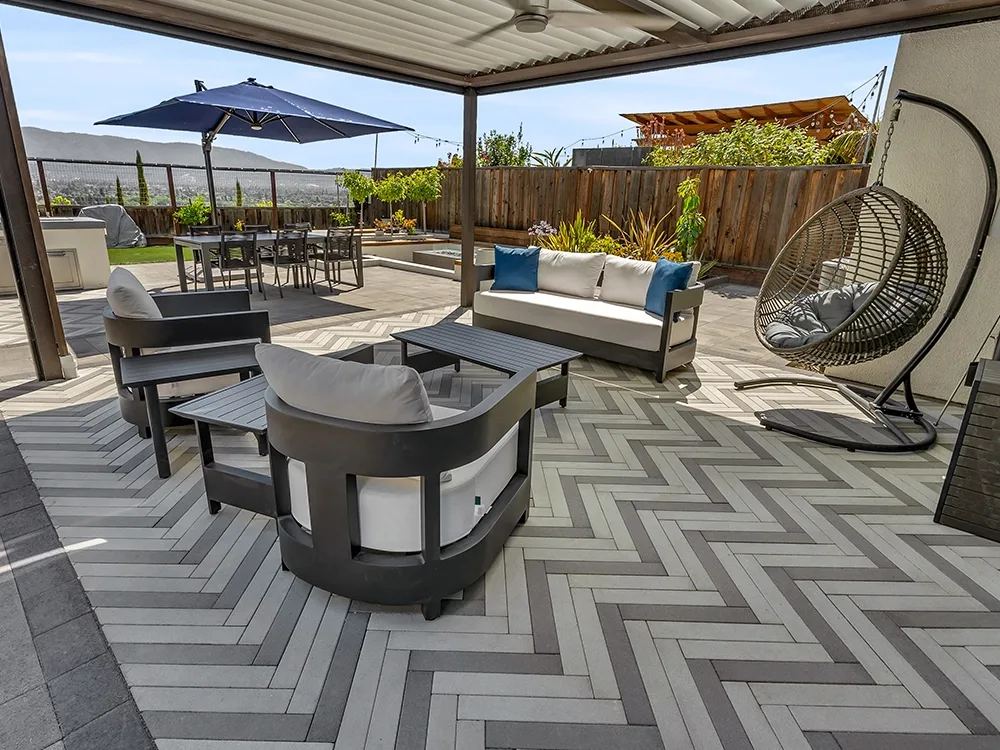
Furthermore, permeable pavers address drainage and environmental concerns. These units allow water to filter through joints into the ground below, reducing runoff and protecting local watersheds. This sustainable choice prevents puddles while recharging groundwater supplies naturally.
Small Patio Ideas That Maximize Limited Space
Small patios use thoughtful design to feel comfortable rather than cramped. Vertical elements draw the eye upward and make areas feel larger than their actual square footage. Wall-mounted planters, trellises with climbing vines, and tall privacy screens are good options that don’t take up floor space.
Built-in features also eliminate the need for bulky furniture. Consider bench seating along patio edges or integrated planters to frame your space with greenery.
Light-colored pavers reflect more sunlight and create an airy, open feeling. Cream, beige, and pale gray pavers visually expand small areas compared to dark materials that can make spaces feel enclosed.
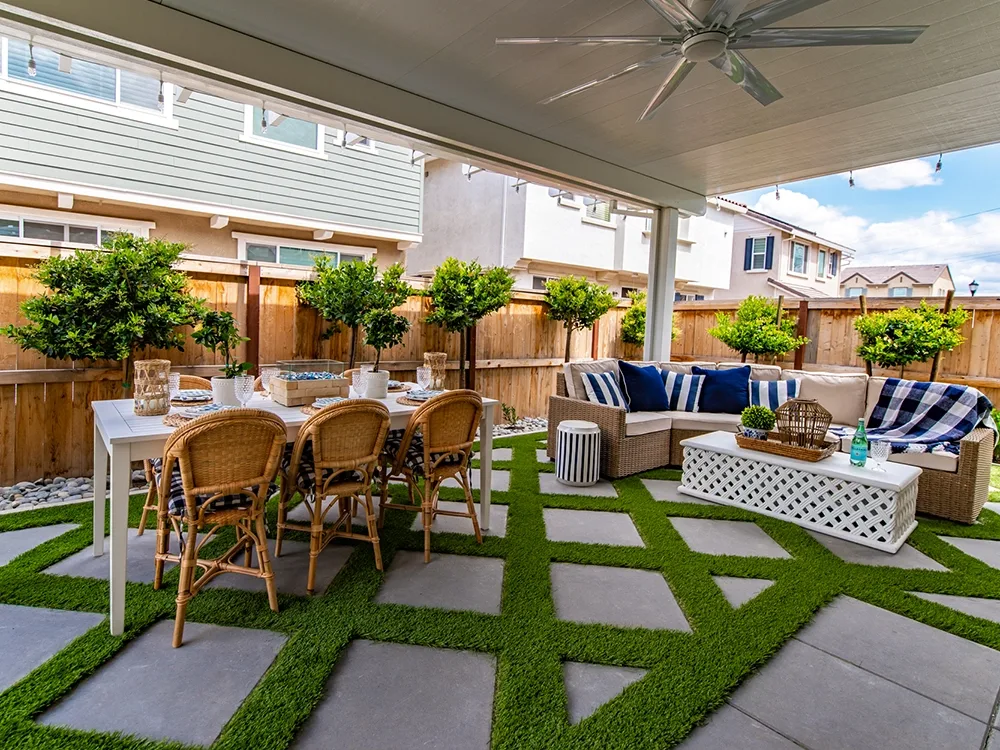
Smart layouts help townhomes and condos maximize every inch. For example, L-shaped designs tuck into corners while diagonal patterns trick the eye into perceiving more space.
Patio Design Ideas by Lifestyle
Family-friendly patios prioritize safety and versatility. Durable materials withstand active play, spills, and heavy use. Rounded edges and slip-resistant surfaces reduce injury risks during energetic games.
Entertainer patios revolve around hosting guests comfortably. Generous dining areas accommodate large tables, while a BBQ island and an outdoor fireplace become focal points for gathering.
Busy homeowners appreciate patios that deliver outdoor beauty without constant upkeep. Quality pavers require only occasional sweeping and rinsing, perfect for a low-maintenance backyard.
Additionally, relaxation-focused designs, such as fire pits or water features, create personal retreats for unwinding out on your patio.
Patio Ideas by Climate and Region
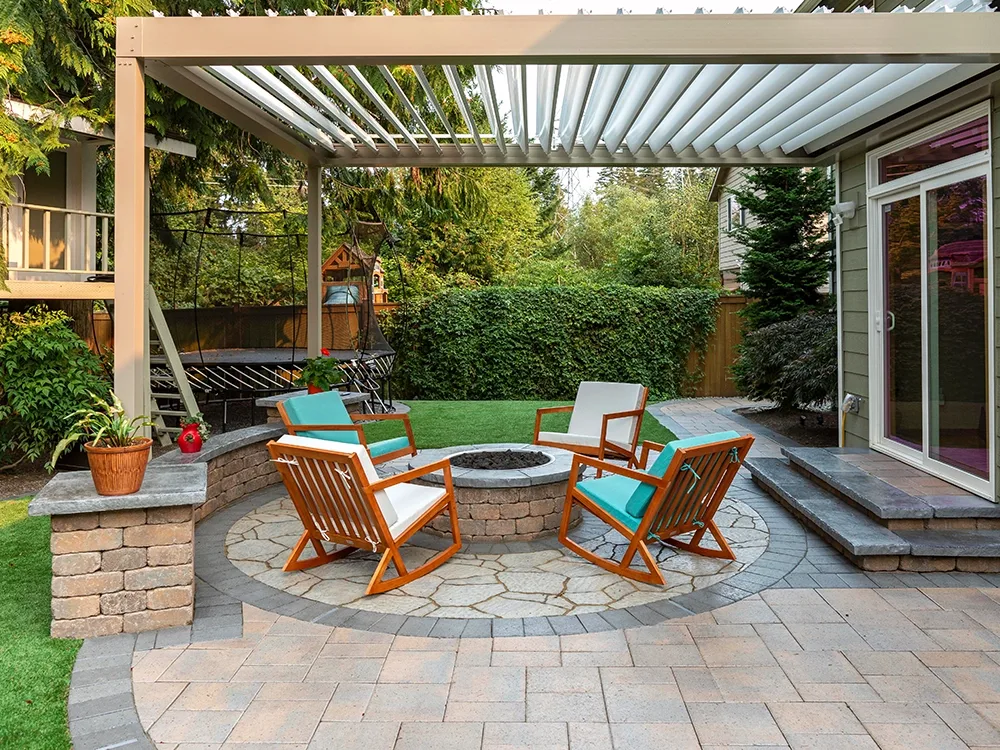
Hot climates demand specific strategies to keep patios comfortable during peak summer months. Heat-resistant pavers in light colors stay cooler underfoot than dark alternatives. Shade structures, like a pergola, can filter harsh sunlight while allowing breezes to circulate.
Wetter climates require proper drainage solutions to prevent standing water and slippery surfaces. Pavers installed with adequate slope direct water away from your home's foundation. Permeable options allow rainfall to absorb naturally rather than pooling on the surface.
Cold climates need materials that survive freeze-thaw cycles without cracking or deteriorating, like:
Dense pavers with low water absorption
Proper base preparation to prevent frost heaving
Sand-set joints for slight movement during temperature swings
Popular Patio Add-Ons That Elevate Any Design
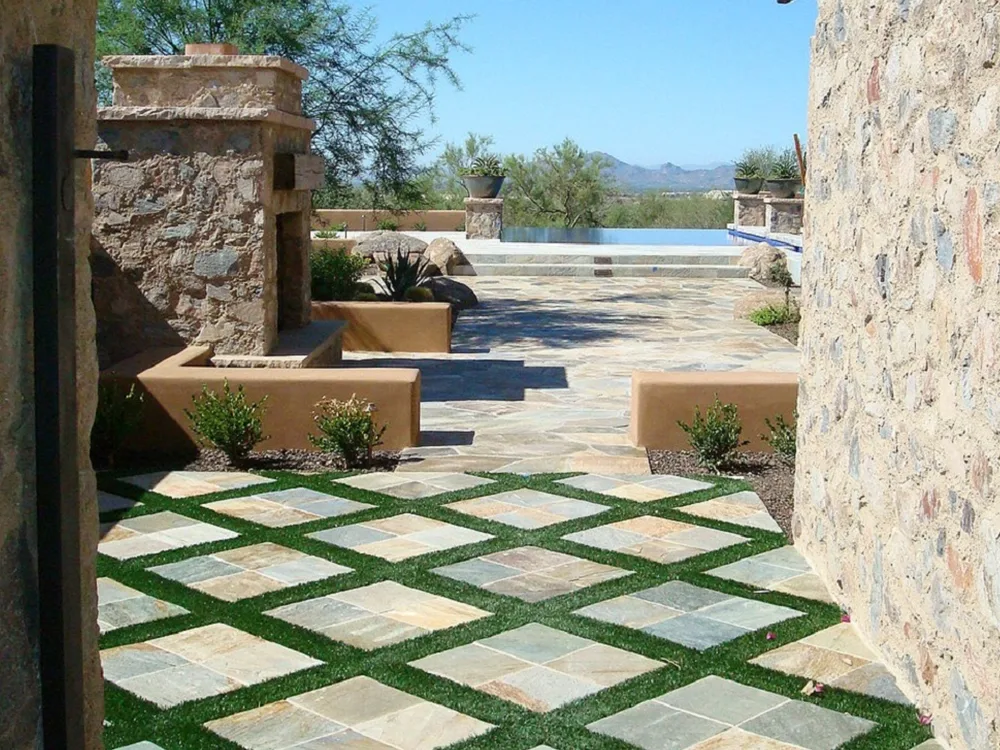
Fire pits and fireplaces both add warmth and ambiance. Fire pits can be built to offer 360-degree seating that encourages conversation and marshmallow roasting. Fireplaces provide dramatic focal points with mantels for displaying decor.
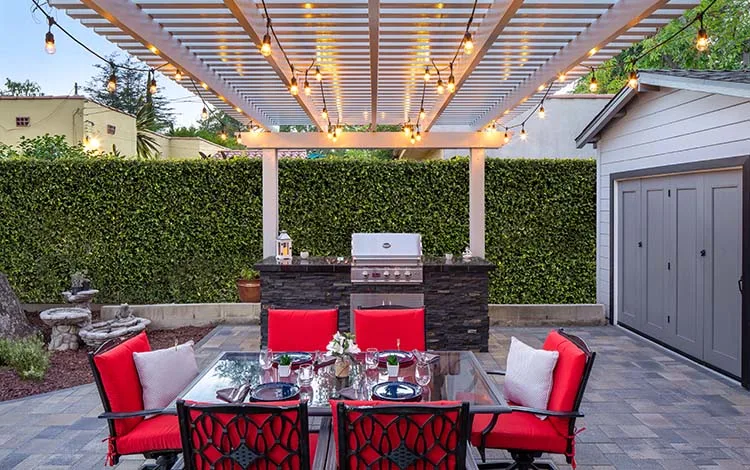
Outdoor kitchens transform patios into full-service entertaining zones. Built-in grills, refrigerators, and prep counters eliminate trips inside during cookouts. Seating walls also serve multiple purposes. They help define patio edges while providing extra spots to sit during crowded gatherings.
Shade structures protect people and furnishings from weather extremes. Pergolas filter sunlight through slatted roofs while supporting climbing plants for natural beauty. Solid-roof options provide complete rain and sun protection.
Landscape lighting transforms how you use your patio after sunset. Properly placed fixtures highlight key features, improve safety along pathways, and create ambiance for evening gatherings without overwhelming the space with brightness.
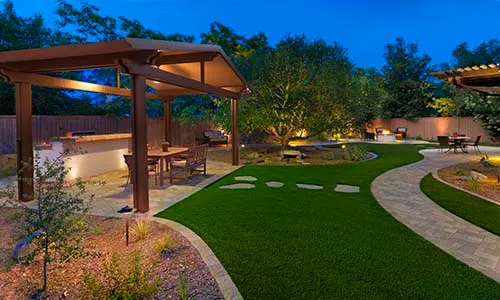
How to Choose the Right Patio for Any Backyard
Determining patio size depends on how you plan to use the space. Dining areas need room for tables, chairs, and traffic flow around seated guests.
Plan for at least 10 feet by 10 feet as a minimum for four people. Lounging areas require space for furniture arrangements that encourage conversation without crowding. Add 20-30% to your initial size estimate to prevent a cramped feeling.
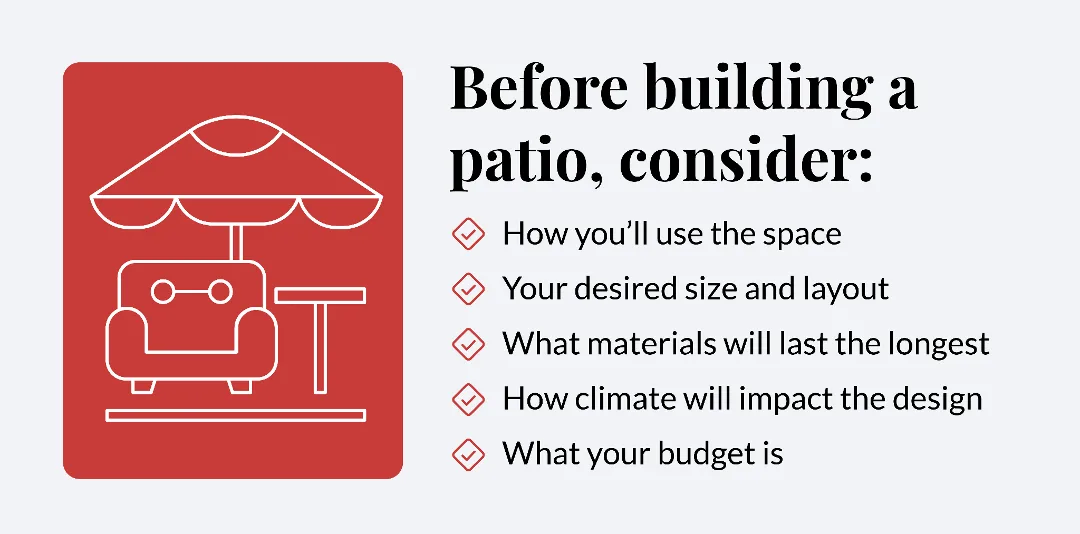
When it comes to materials, pavers easily justify their initial cost through their longevity, repairability, and aesthetic versatility. Yes, the initial investment exceeds poured concrete, but superior performance over decades makes pavers economical long-term. Interlocking pavers can also be replaced individually if you need to get underneath them (to access utilities, tree roots, etc.) without redoing entire sections.
The best low-maintenance patio combines quality materials with smart design. Choose pavers that resist staining and weather damage naturally and install proper drainage to prevent water problems before they start.
Keep landscaping simple around patio edges to reduce trimming and weeding.
Bring Your Patio Ideas to Life
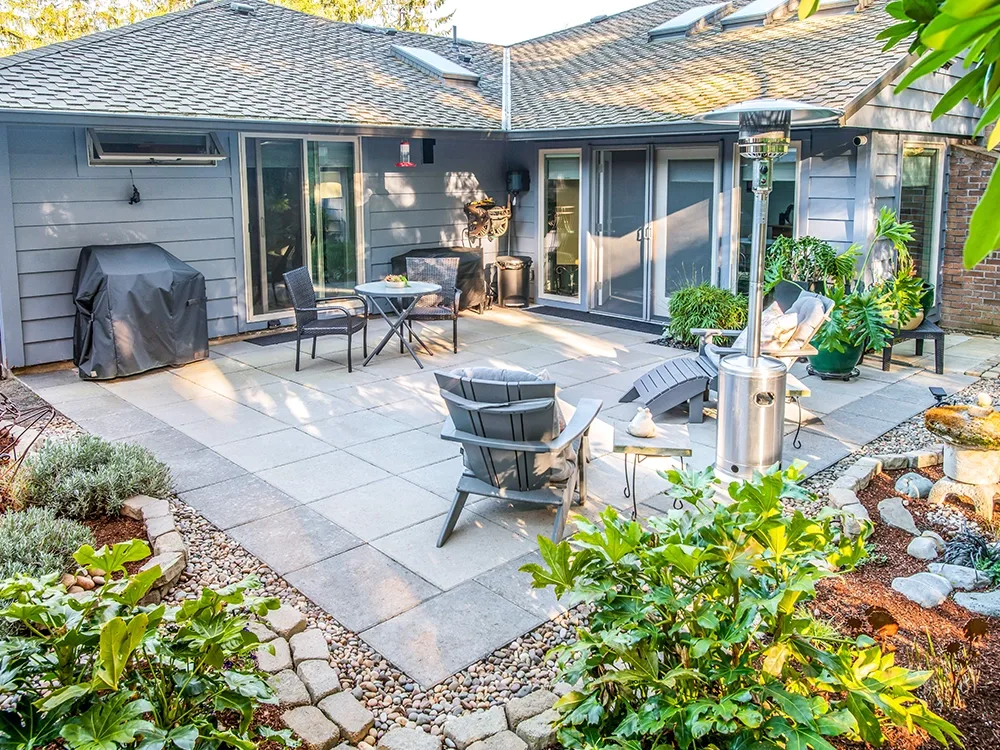
A well-designed patio changes how you use your property. The right combination of materials, layout, and features creates outdoor space that serves your specific needs rather than generic ideas of what a backyard should include.
System Pavers specializes in turning concepts into finished installations that last. Our team handles design, material selection, and professional installation to deliver results that perform well for decades.
Browse our project gallery to see completed projects, or explore more easy outdoor upgrades that complement your new patio.
Ready to talk patios? Book a free, no-risk consultation today.

Frequently Asked Questions
What are budget-friendly patio ideas?
Standard concrete pavers cost less than premium natural stone while still offering durability and appeal. Simple patterns like a running bond require less labor than complex designs. Handle landscaping yourself around the patio edges. Consider DIY installation for very small projects, though professional work typically provides better long-term value through proper preparation and technique.
Are paver patios good for small yards?
Yes, paver patios are great for small yards because their modular nature allows custom sizing and shapes that fit irregular spaces. Light-colored pavers make compact areas feel more spacious and built-in features like bench seating maximize functionality without consuming space. The design flexibility of pavers helps small yards feel purposeful rather than cluttered or cramped.
How do I maintain a paver patio?
Sweep your paver patio regularly to remove leaves and debris that can stain if left too long. Rinse with a garden hose or pressure washer on a low setting to clean surface dirt. Address weeds in joints and fill them in with a little sand every few years to maintain stability and prevent future weed growth. Also, seal pavers according to manufacturer guidelines to protect against stains and weather damage while enhancing color vibrancy.