Beyond the Front Door: Outdoor Upgrades That Boost Curb Appeal
Published Date: Aug 12, 2026
It’s no secret every home has a distinct personality. Yours make an impression before anyone ever steps foot through your front door.
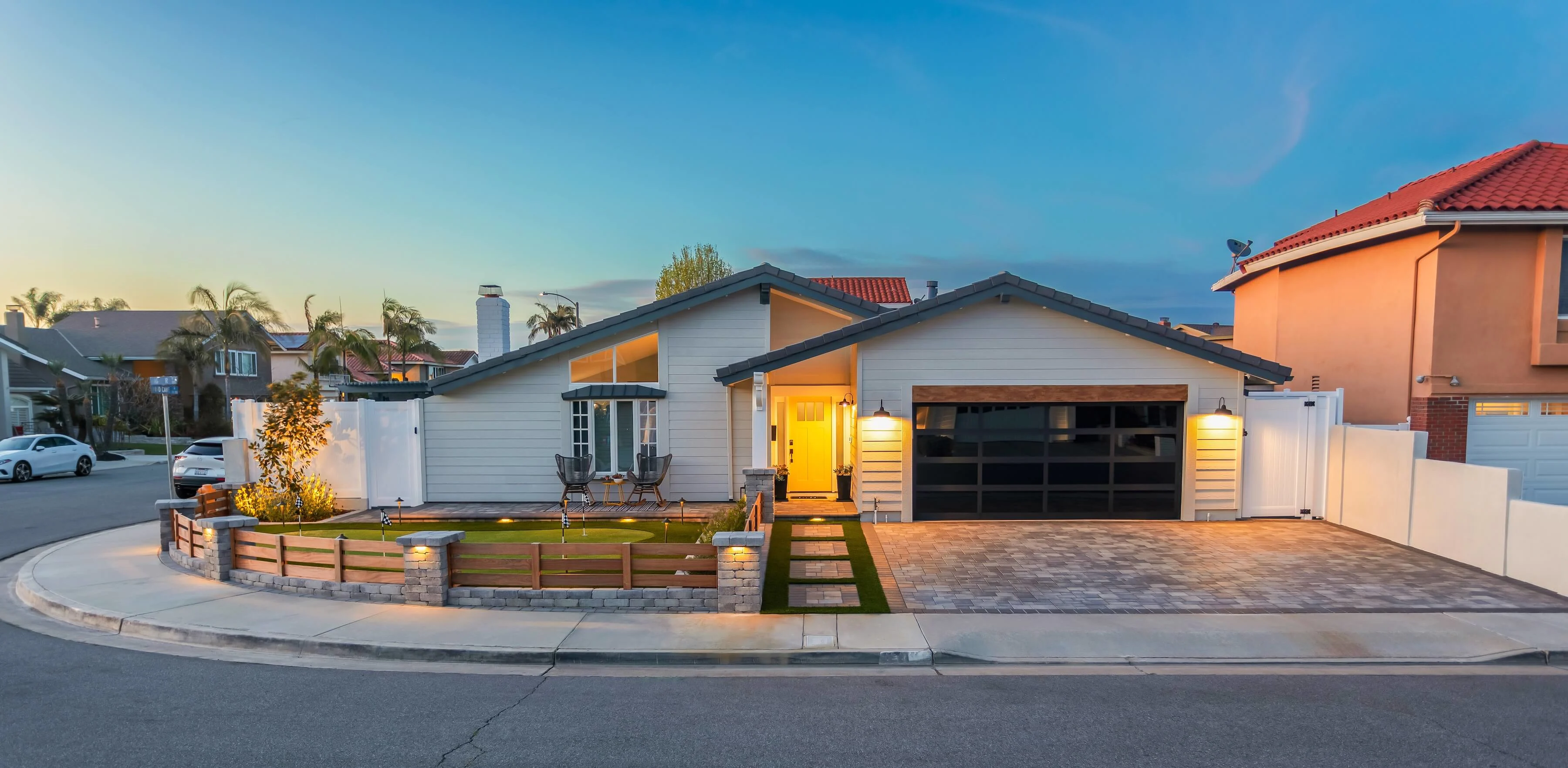
From the street, guests and neighbors see the driveway, walkway, landscaping, entry and front of the home as one complete picture. And when you arrive home at the end of the day, you experience that same view but with an added sense of relief and appreciation. This is the place you call home.
We want to help you make it more beautiful.
That’s why great curb appeal is about more than a freshly painted front door or a few new plants. The most successful front yard makeover ideas consider the entire arrival experience. From the moment you pull into the driveway to the moment you walk inside.
With the right combination of hardscape, planting, lighting and thoughtful design, outdoor upgrades can make a home feel more welcoming, polished and complete. Just as importantly, choosing durable, low-maintenance materials can help that first impression last for years.
What is curb appeal and why does it matter?
Curb appeal is the overall appearance and impression a home makes from the street. It includes the architecture of the home, driveway, walkway, landscaping, lighting, entryway and other visible outdoor features.
But curb appeal is about more than appearance.
A well-designed front yard can make your home feel more inviting every time you pull in. It can create a more comfortable and intentional path to the front door, highlight architectural details and give outdoor spaces a sense of purpose.
And if you eventually decide to sell, a well-maintained exterior can contribute to how prospective buyers perceive the property. Research from Zillow has found that many of the home improvements with the strongest potential returns are exterior projects, while homes with attractive landscaping and outdoor lighting have also shown positive sale-price associations.
In other words, curb appeal can be an investment in both how your home feels today and how it may be perceived by buyers tomorrow.
How to improve curb appeal beyond landscaping
Landscaping is an important part of any front yard, but plants alone don't necessarily create a finished look.
Think of your front yard like the rooms inside your home. Furniture, flooring and architectural details help define an interior space. Outdoors, hardscape can play a similar role.
Pavers, walkways, driveways, patios and borders establish structure. Once your foundation is set, plants can be used to those lines and bring color, texture and life to the design.
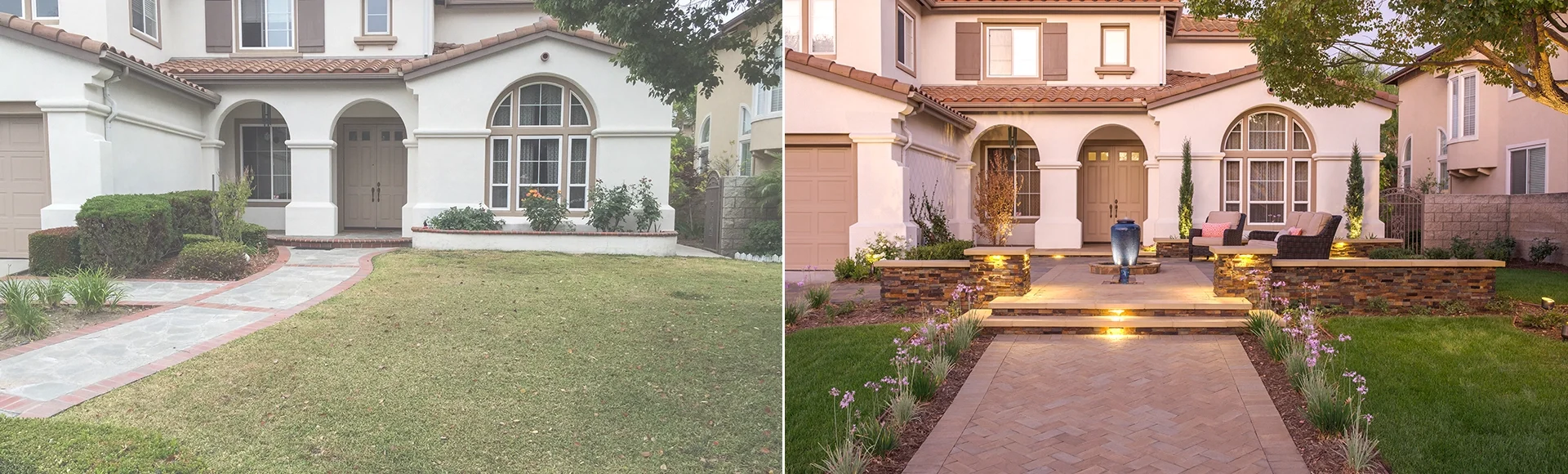
The result is an outdoor space that feels intentional rather than simply….there.
Here are some of the highest-impact curb appeal ideas to consider.
1. Create a welcoming paver walkway
The path to your front door can be one of the most important parts of the arrival experience.
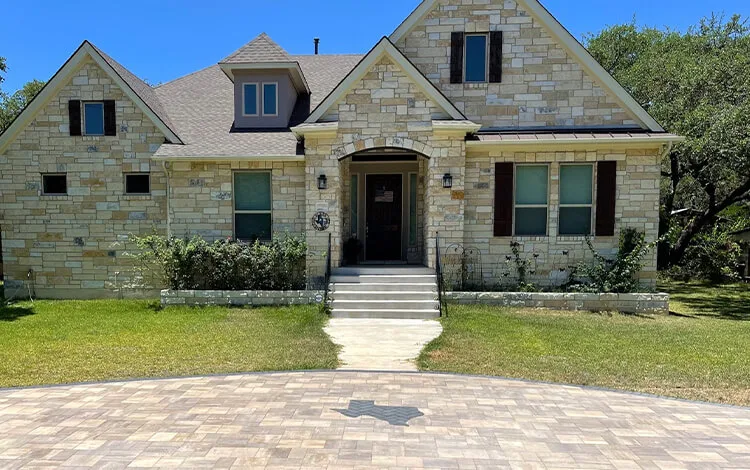
A worn, cracked or entirely non-existent walkway can make an otherwise beautiful home feel unfinished. By incorporating a thoughtfully designed paver walkway, you can immediately create more definition and visual interest.
Why choose paving stones? Outdoor living expert and our Pacific Northwest Regional VP Aaron Brundage explains, “Pavers come in a wide variety of shapes and colors, allowing you to customize the look of your driveway to complement your home’s architecture. In addition to boosting your home’s curb appeal big time, paving stones have the added benefit of being twice as durable as concrete.”
There are countless paver walkway ideas to explore, from simple straight paths to sweeping curves, contrasting borders and patterns that complement the architecture of your home.
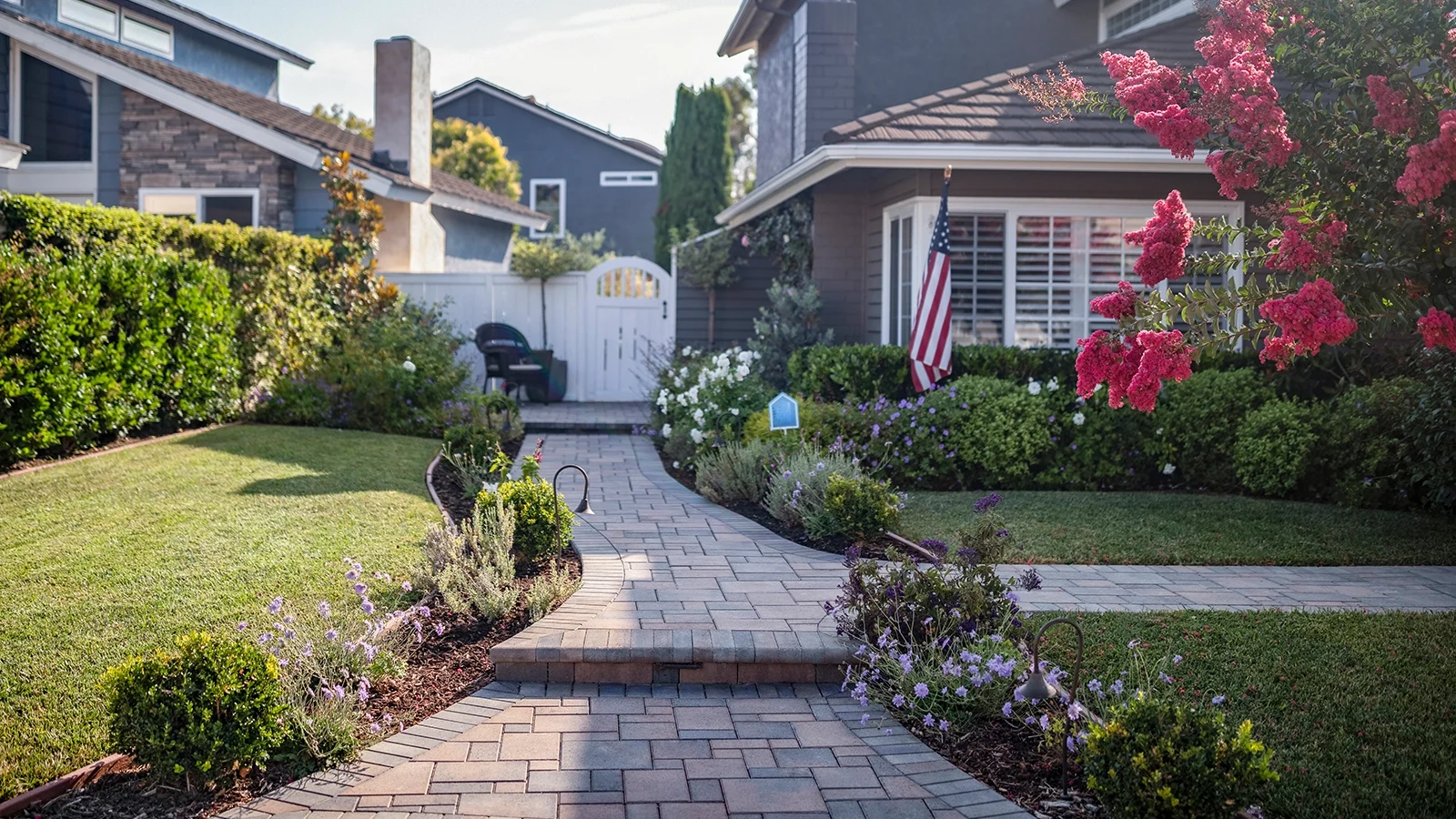
When designing a front walkway, consider:
A wider walkway that feels more substantial and welcoming
Curved lines that complement a traditional or organic architectural style
Clean, geometric patterns for contemporary homes
Contrasting paver borders to define the path
Steps or transitions that connect different elevations
Low-maintenance planting along the edges
Landscape lighting that highlights the walkway after dark
A well-designed walkway does more than get people from the sidewalk to the front door. It shows them where to go and makes arriving feel like part of the experience.
2. Give the driveway a design upgrade
Driveways often occupy a significant portion of the front of a property, yet they're frequently treated as an afterthought.
That makes the driveway one of the biggest opportunities for improving driveway curb appeal.
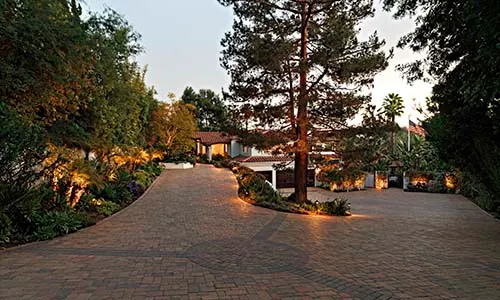
Instead of viewing the driveway as simply a place to park, think of it as one of the foundational elements of your home's exterior design. Brundage goes a little deeper, explaining that “many people don’t realize the impact a well-designed paving stone driveway can have, not only on their home’s curb appeal, but on their mood every time they pull up to their gorgeous view.”
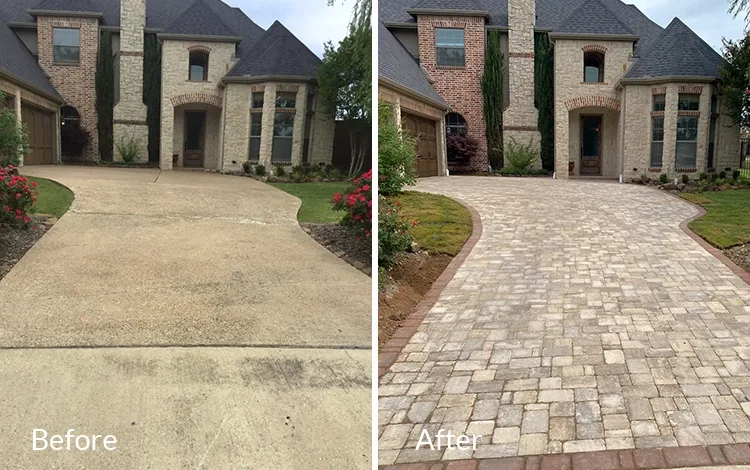
A paver driveway can introduce color, texture and pattern while creating a visual connection between the street and the architecture. Borders can help define the space, while complementary pavers can tie the driveway into the walkway and other hardscape elements.
The goal isn't necessarily to make the driveway stand out. It's to make it feel like it belongs.
3. Create an entry courtyard
If you have the space, an entry courtyard can transform the front of your home from a pass-through area into a destination.
An entry courtyard can provide a defined space for seating, entertaining or simply enjoying a quiet moment outside. It can also create a stronger transition between the public space of the street and the private space of your home.
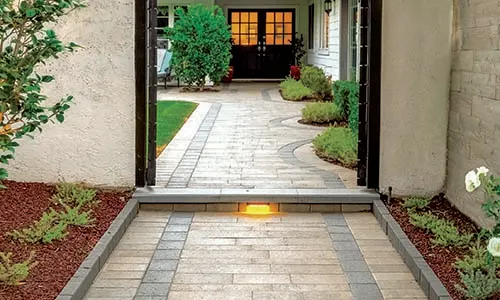
Pavers can establish the foundation, while planting, walls, columns, gates or other architectural elements can add privacy and personality.
For larger properties, an entry courtyard can also help break up a large front yard into more intentional outdoor rooms or zones.
Get ideas by viewing some of our favorite projects in our Outdoor Gallery >
4. Add a front patio
Who says all your outdoor living has to happen in the backyard? Front yards are your property too!
A front patio can turn an underused area near the entry into a place to sit, relax and connect with the neighborhood.
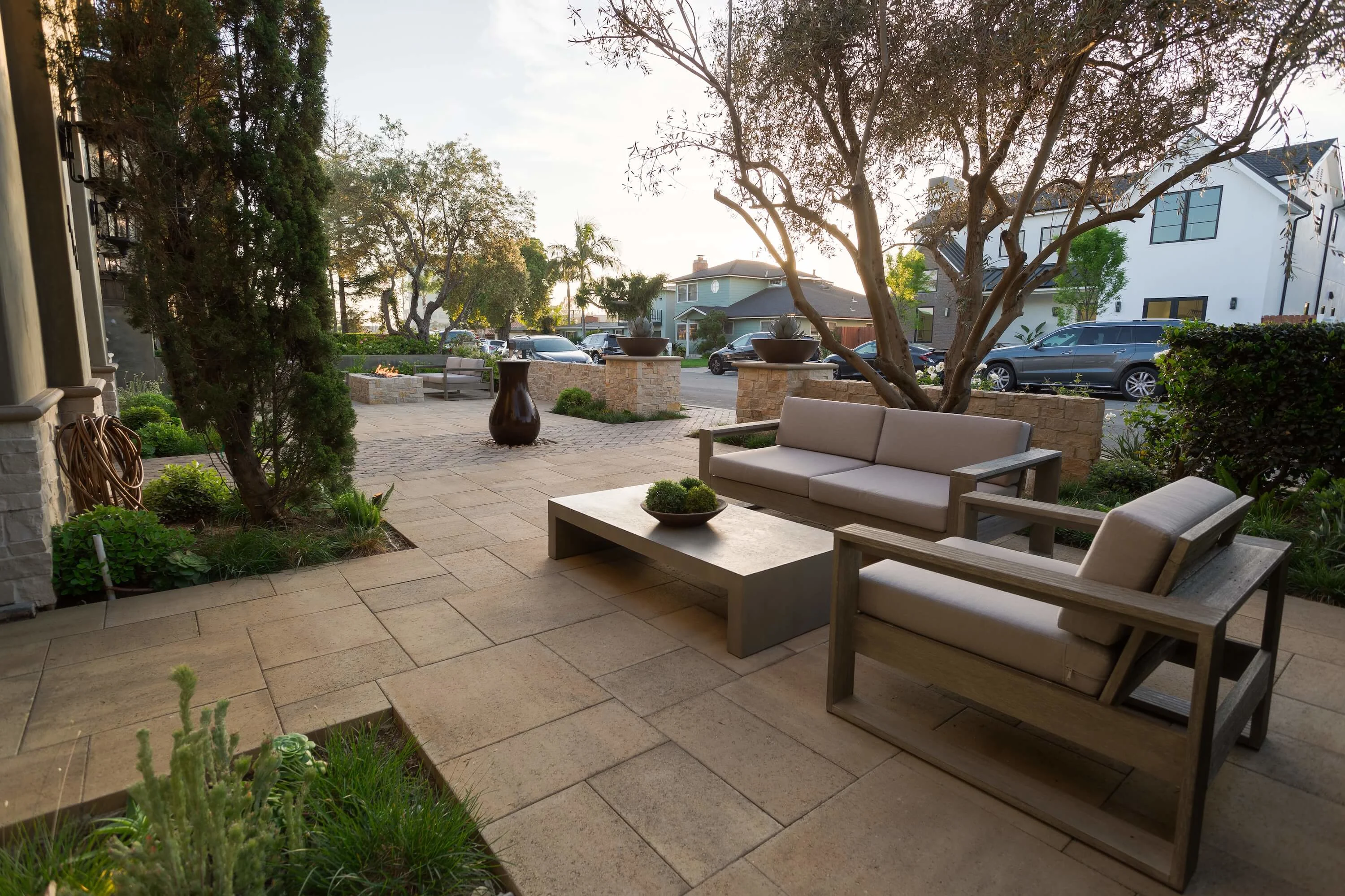
Depending on your home's layout and your own privacy needs, a front patio might include:
Comfortable outdoor seating
A small dining area
Decorative planters
A fire feature
Low-maintenance landscaping
Landscape lighting
A pergola or shade structure
A front patio can also make a home feel more approachable. Instead of simply walking through the yard and straight indoors, you (and guests) have a reason to linger a little longer outside.
5. Choose low-maintenance planting
Plants bring a front yard to life. However, savvy gardeners and even novices understand that the best landscaping isn't necessarily the landscaping that requires the most work.
For homeowners looking for low-maintenance curb appeal, consider plants, trees, and landscape designs suited to your local climate and growing conditions.
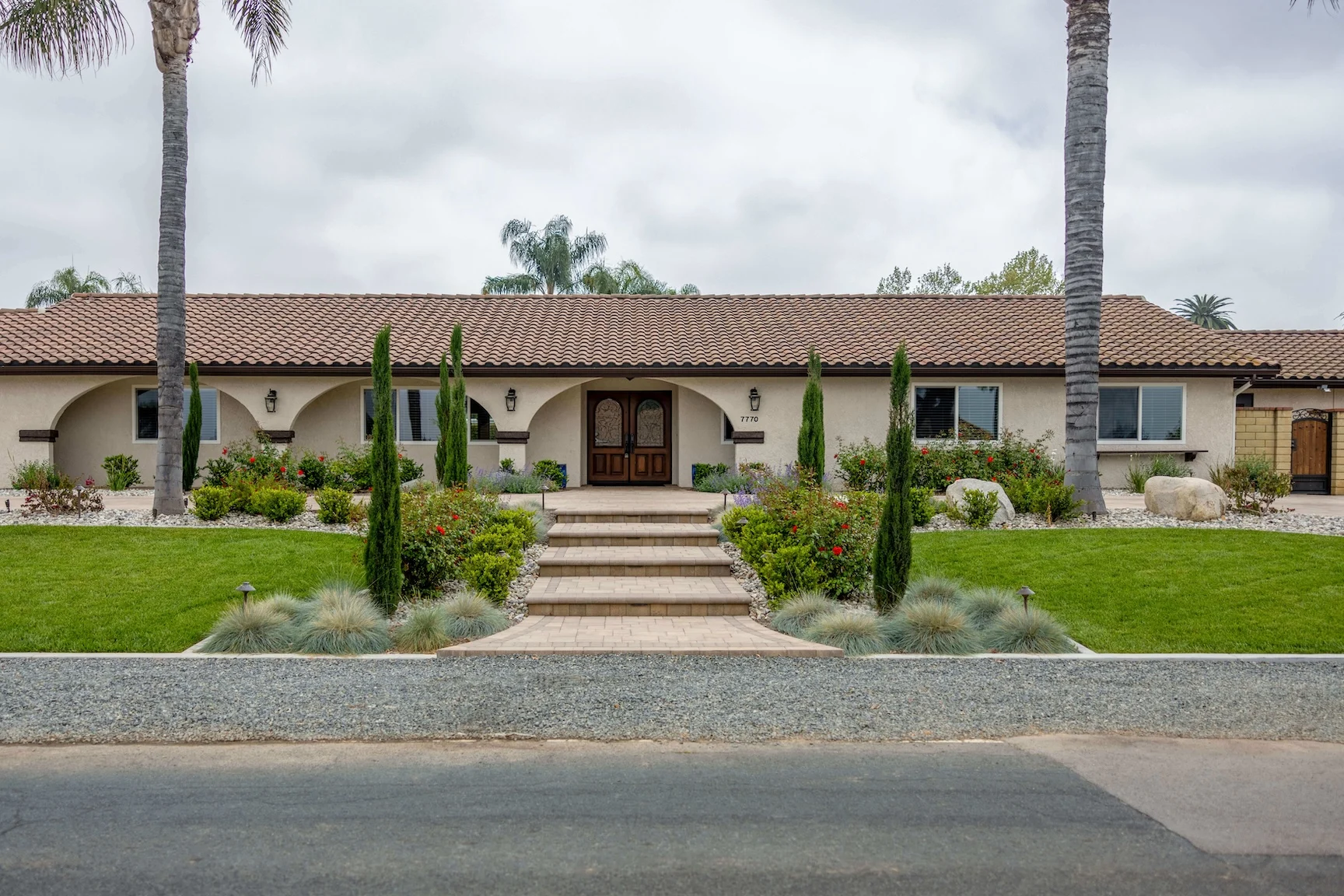
Layering plants of different heights, textures and shapes can create visual depth without requiring an overwhelming number of varieties. Defined planting beds can also keep the landscape looking intentional and make ongoing maintenance easier.
The key is balance.
Hardscape provides the structure. Plants provide softness.
Together, they create a front yard that feels finished without requiring constant attention.
6. Use landscape lighting to extend the experience
The sun may set but that doesn’t mean your home has to stop making a good impression.
Landscape lighting can highlight architectural features, illuminate walkways and create a warm, welcoming feeling around the front entry.
It can also add another dimension to your curb appeal by allowing you to see and enjoy the details you've invested in after dark.
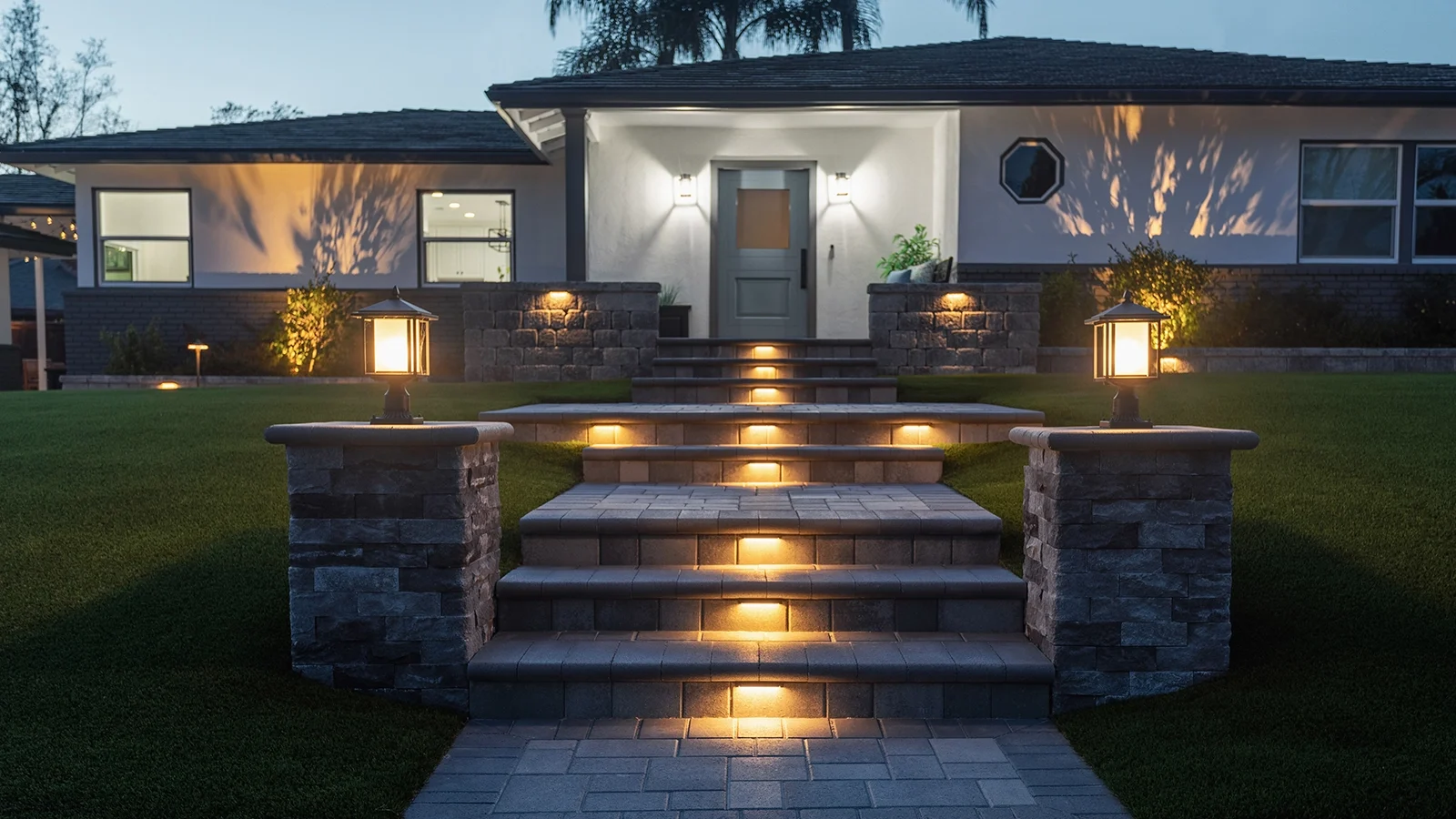
Consider lighting:
Along walkways and steps
Around planting beds
Near architectural features
Along driveway edges
Around entry courtyards and patios
Near trees or other focal points
You don’t necessarily want lighting that’s harsh or looks like security measures. Yes, lights can enhance safety but thoughtfully planned lighting should make your home feel naturally warm and inviting, while casually enhancing safety.
Hardscape creates the structure plants can't
One of the biggest mistakes homeowners make when planning a front yard makeover is thinking only about what to plant.
Plants are important, but they don't necessarily define the space.
Hardscape provides the framework that makes the rest of the design work.
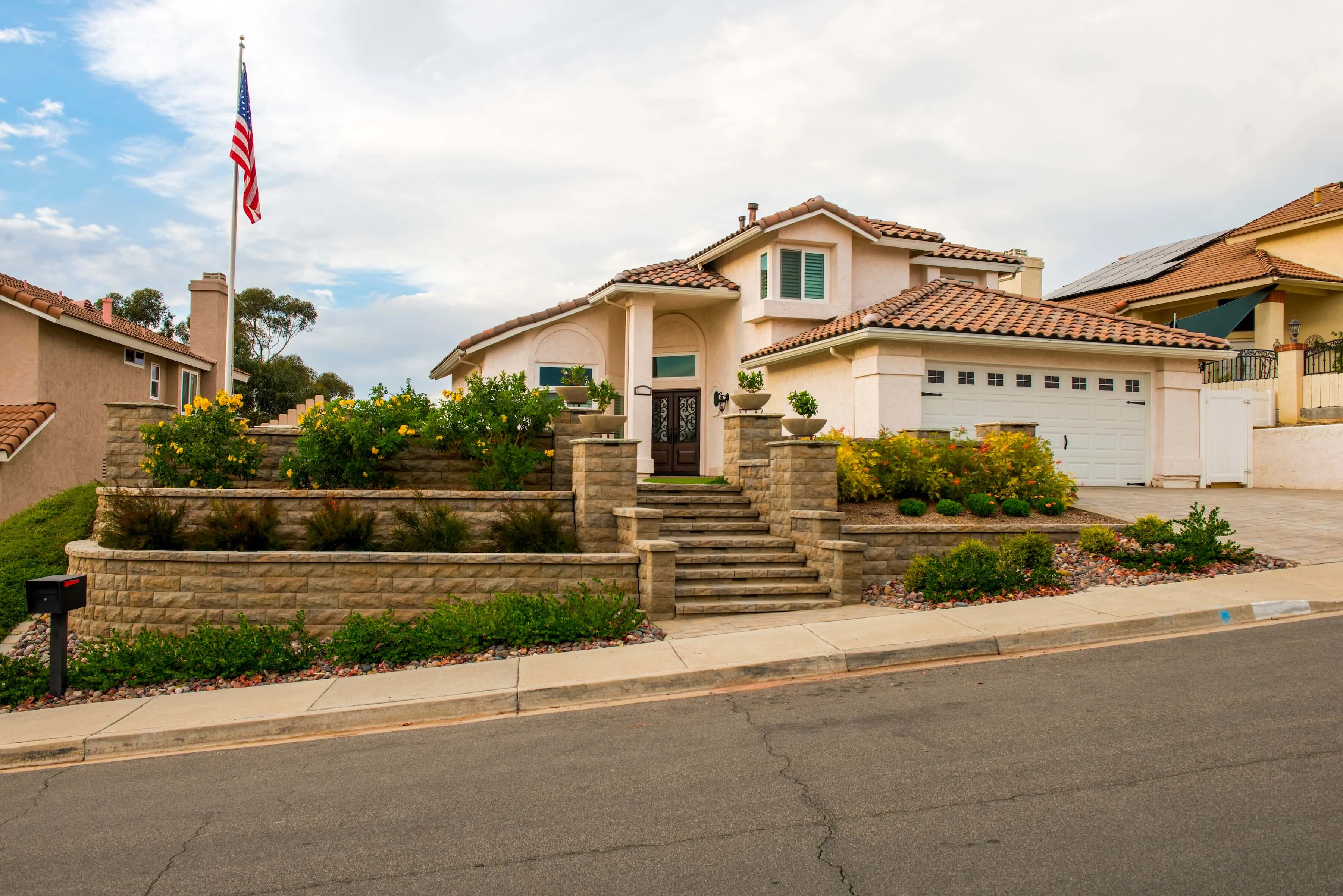
A paver walkway establishes a destination. A driveway creates a defined arrival point. A front patio creates an outdoor room. Borders distinguish planting areas from walking and driving surfaces.
Your yard’s plants will grow and change throughout the seasons, while hardscape gives everything a well-defined sense of order that’s timeless.
And unlike living elements that may need pruning, watering, replacing or refreshing, quality hardscape can provide a durable design foundation for years to come.
Let your home's architecture lead the design
The best curb appeal doesn't look like it was added to the house. It looks like it was designed with the house.
Before choosing paver colors, patterns or planting, look at the architecture and existing materials.
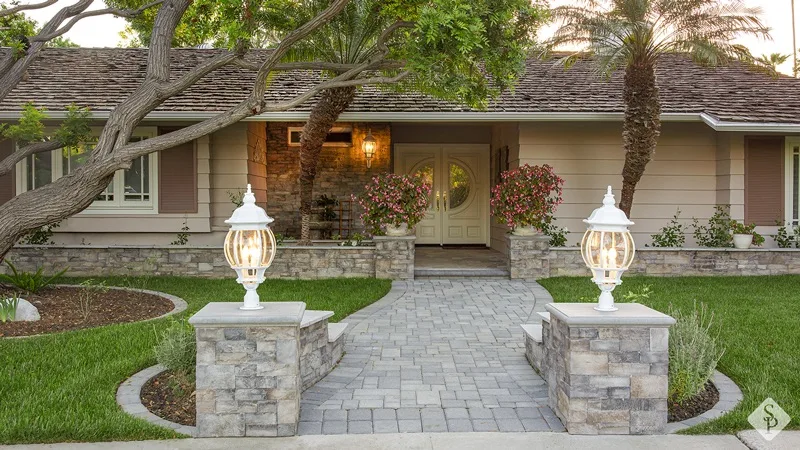
Is your home traditional, contemporary, Mediterranean, craftsman, ranch-style or something else entirely?
Pay attention to:
Rooflines and architectural shapes
Exterior colors
Stone, brick or stucco
Window and door styles
Existing landscape features
The scale of the home
The surrounding neighborhood
A contemporary home may benefit from clean lines and larger-format pavers. A more traditional home might call for classic patterns, defined borders and softer planting.
There isn't one right answer. The goal is to create a cohesive relationship between the home and everything surrounding it.
Choose materials that make curb appeal last
A beautiful front yard shouldn't require you to constantly start over.
When considering outdoor home improvement ideas, think beyond the initial transformation. Consider how the materials will look and perform years from now.
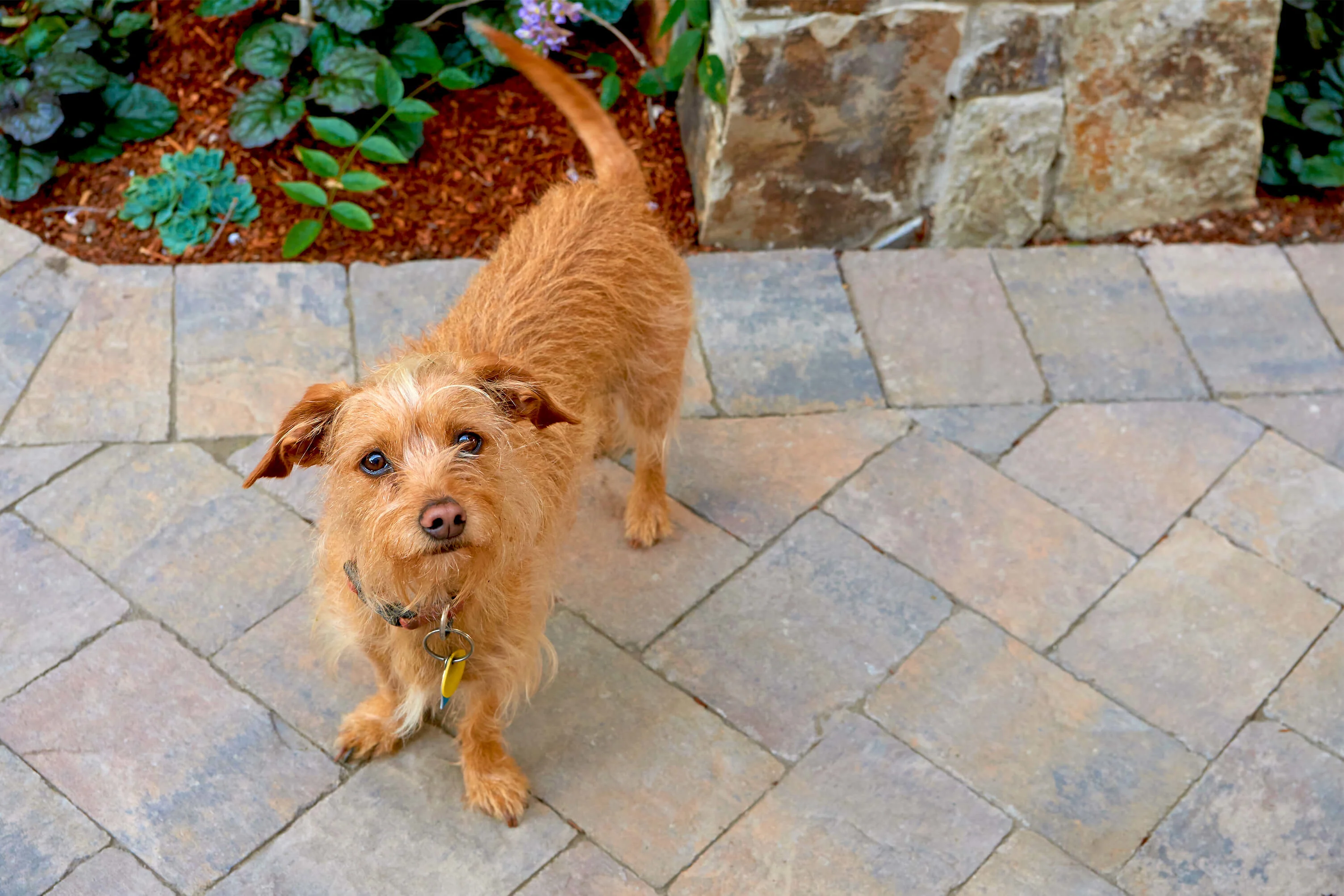
Durable hardscape can provide a long-lasting foundation for your outdoor design, while low-maintenance landscaping can reduce the amount of ongoing work required to keep the space looking its best.
That combination is particularly valuable for homeowners who want their outdoor spaces to look polished without turning maintenance into a second job.
The right design should make your life easier as the last thing anyone needs is a longer list of chores!
Curb appeal is about more than what your neighbors see
It's easy to think of curb appeal as something you create for other people.
But you experience it every day.
You see it when you leave for work in the morning. You see it when you pull into the driveway. Your guests experience it when they arrive for dinner. Your family experiences it when they walk up to the front door or play in the driveway.
You may not be trying to create a home that looks impressive. But you always want a view that makes coming home feel good.
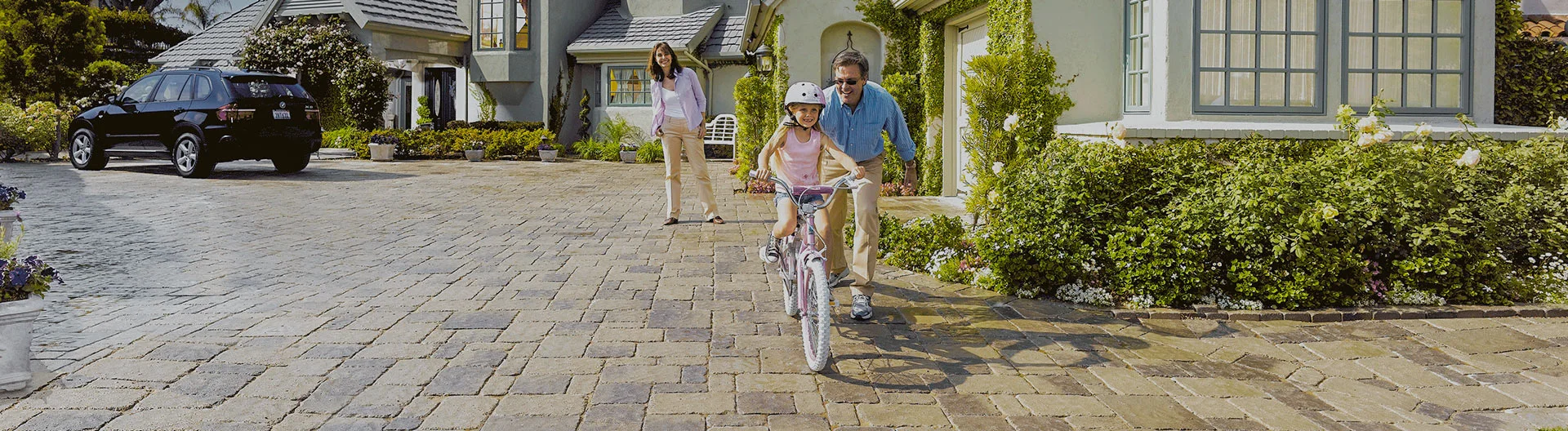
A thoughtfully designed driveway can make arrival feel more polished. A welcoming walkway can create a sense of anticipation. A front patio can give you somewhere to pause. Landscape lighting can make the view outside your front windows feel beautiful after dark.
Individually, these may be small outdoor renovations, but they create moments that turn into a feeling you and your family get to enjoy every day.
Does curb appeal increase home value?
There isn't a single formula that determines how much a curb appeal project will add to a home's value. ROI depends on the project, local market, quality of the work and what buyers in the area value.
That said, exterior improvements can contribute to a home's perceived value and marketability. Zillow's research has found that exterior projects make up many of the improvements with strong potential ROI, and it has also reported positive sale-price associations for features such as attractive landscaping and outdoor lighting.
For homeowners, that means the best approach isn't necessarily to chase a specific resale percentage.
Instead, prioritize improvements that make the home more functional, attractive and enjoyable now. As a bonus, you'll also be creating a well-maintained exterior that can serve you well if you decide to sell later.
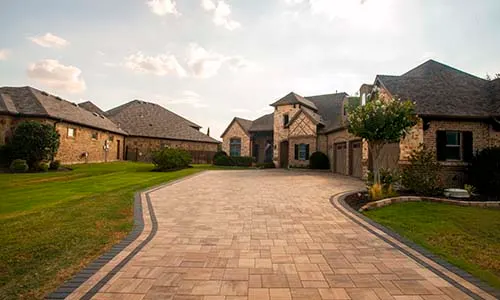
The best curb appeal starts with the arrival experience
Your front yard is more than the space between the street and your house.
It's the first chapter of the experience of coming home.
When a driveway, walkway, landscaping, lighting and architecture work together, even everyday arrivals can feel special. And when those improvements are designed with durable, low-maintenance materials, you get to enjoy that transformation without constantly maintaining it.
So, if you're wondering how to improve curb appeal, don't start by asking what plant you should put in the flower bed.
Start by looking at the whole picture.
What do you see from the street? How do you move toward the front door? Where does your eye go? What feels unfinished? And what could make coming home feel a little more welcoming?
You may discover that it’s not about adding more. It's about creating a better connection between everything that's already there.
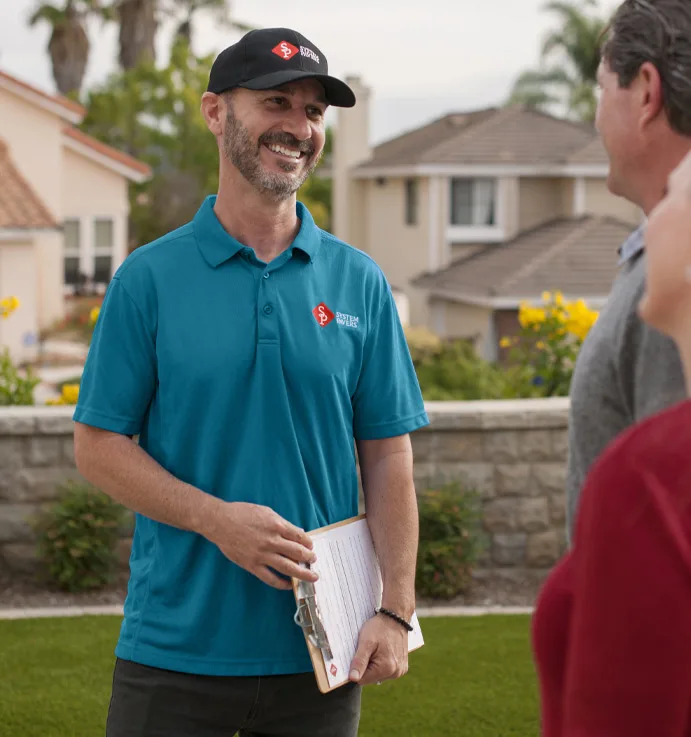
If you need ideas on design, have questions on materials, or are ready to get started, we're here for you!
Let's Talk!
Tell us a little about yourself and we'll call to help you schedule a free, in-person design consultation!
Curb appeal FAQs
What are the best ways to improve curb appeal?
Some of the most impactful ways to improve curb appeal include upgrading the driveway, adding a paver walkway, creating a front patio or entry courtyard, refreshing low-maintenance landscaping and installing landscape lighting. The biggest impact often comes from combining several improvements into one cohesive design.
What are some front yard makeover ideas that don't require a lot of maintenance?
Consider durable hardscape, defined planting beds, climate-appropriate plants, ground cover and landscape lighting. A well-planned combination of pavers and low-maintenance planting can create a polished front yard while reducing ongoing maintenance.
Does a paver driveway improve curb appeal?
Yes. Because driveways can occupy a large portion of the front of a home, upgrading an outdated or worn driveway can have a significant visual impact. Pavers can add pattern, texture and definition while helping connect the driveway to the home's architecture and other hardscape.
What are some good paver walkway ideas?
Popular paver walkway ideas include curved pathways, contrasting borders, geometric patterns, mixed paver sizes and designs that coordinate with the home's exterior. The best choice depends on the architecture, scale of the property and overall design style.
Is landscaping enough to improve curb appeal?
Landscaping is an important part of curb appeal, but hardscape can provide structure that plants alone cannot. Walkways, driveways, patios and borders help define the space, while plants soften the design and add color and texture.
Does curb appeal add value to a home?
Curb appeal can contribute to a home's perceived value and marketability, although the financial return varies by project and location. Exterior improvements can also make a home more attractive to potential buyers while providing immediate enjoyment for the current homeowner.
How long does a curb appeal makeover last?
The lifespan of a curb appeal makeover depends on the materials and installation quality. Durable hardscape can provide a long-lasting foundation, while low-maintenance plants and well-designed lighting can help reduce the need for frequent refreshing.
What is the most important part of curb appeal?
There isn't one single most important feature. The strongest curb appeal comes from the way the driveway, walkway, entry, landscaping, lighting and architecture work together. Think about the entire arrival experience rather than treating each element as a separate project.