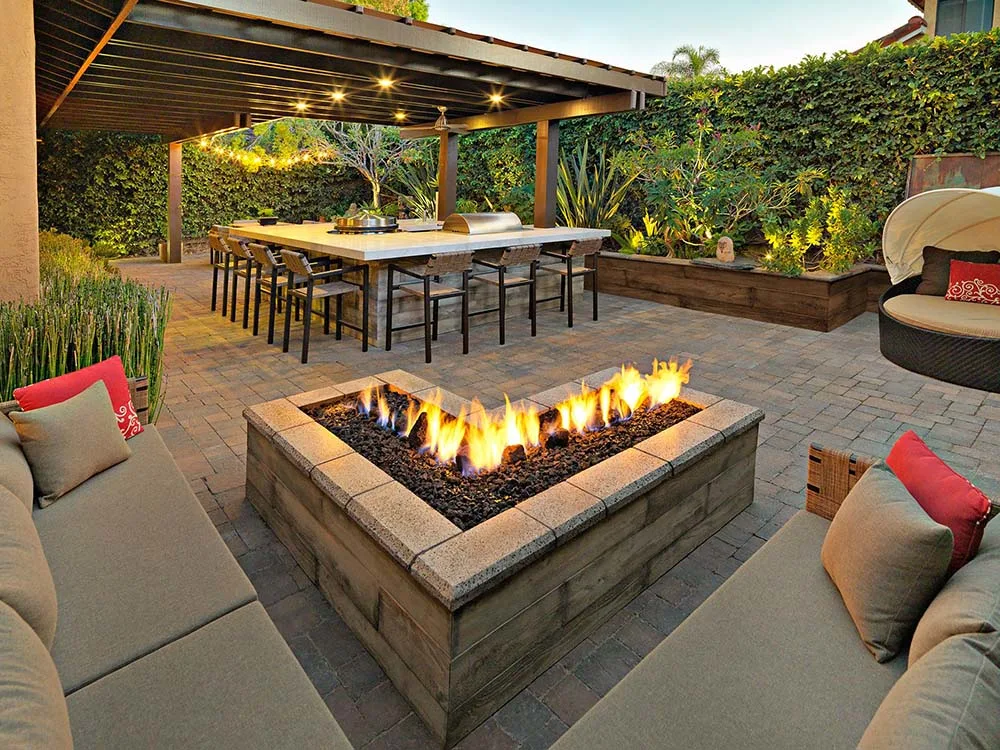
Fire Pit Ideas: Upgrade Your Backyard & Outdoor Space
Published Date: Feb 19, 2026
The right fire pit design enhances your outdoor living space, creates a natural gathering spot, and adds measurable value to your property. This guide covers everything from modern layouts to traditional stone fire pits, helping you choose the perfect option for your space and lifestyle.
Key Takeaways
- Fire pits extend your outdoor season and create a compelling focal point for backyard landscaping.
- Professional installation ensures proper placement, drainage, and compliance with local regulations.
- The right materials and design elements make your fire pit functional for decades.
- Every yard size can accommodate a fire pit area that fits your lifestyle and budget.
Why Fire Pits Are a Must-Have for Outdoor Spaces
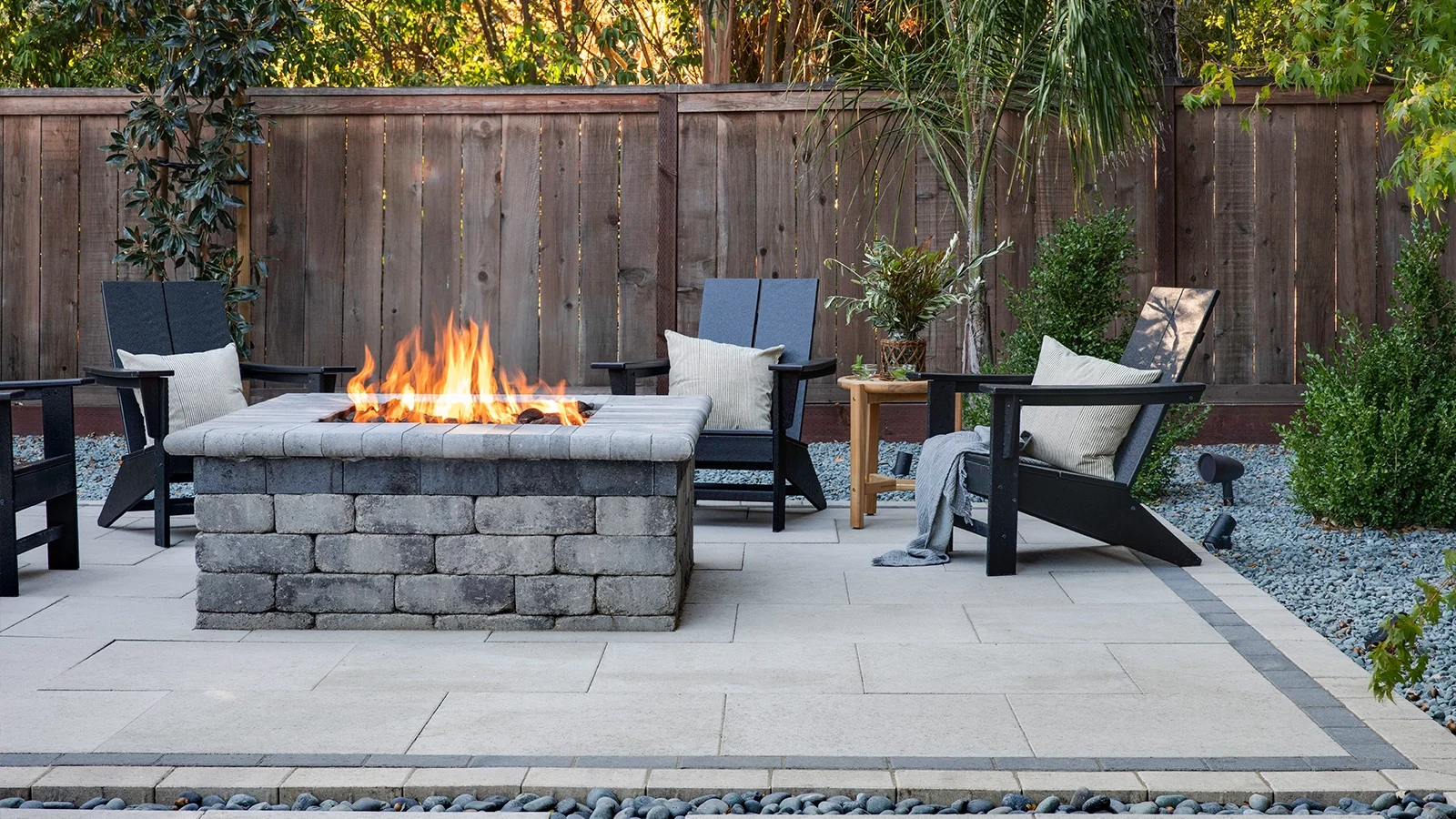
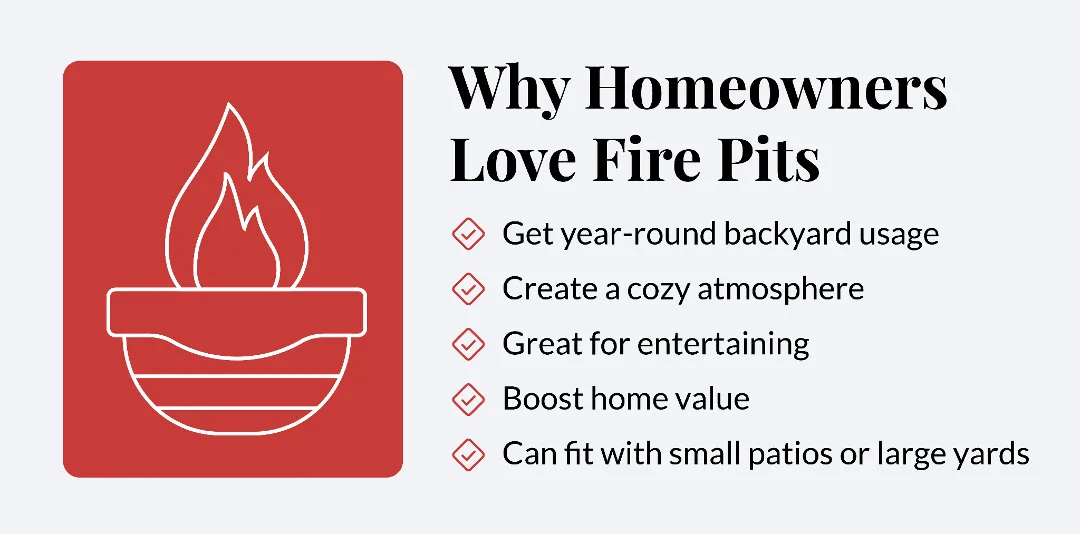
A well-designed fire pit extends your outdoor living season. You can enjoy cool evenings in spring and fall, turning your backyard into a comfortable retreat even as temperatures drop. Fire pits also serve as natural focal points that organize your entire landscape design. They draw the eye and create intentional gathering areas that make your space more lively.
Property values also benefit from outdoor improvements. A professionally installed fire pit area signals quality craftsmanship and adds functional square footage to your home. The investment pays dividends whether you plan to stay for years or sell in the near future.
Additionally, fire pits work in both compact urban patios and sprawling suburban yards. They can conveniently adapt to whatever space you have available.
Backyard Fire Pit Ideas by Style
Your fire pit should reflect your home's architecture and your personal style.
Modern Fire Pit Ideas
Contemporary designs emphasize clean lines and geometric precision. Modern fire pits often feature:
• Sharp angles and rectangular or square shapes
• Materials like concrete, porcelain pavers, and steel in neutral tones
• Linear gas fire pits that create dramatic flame displays
• Low-profile seating with sleek cushions and metal frames
Rustic Fire Pit Designs
Natural materials and organic textures define rustic fire pit areas, often designed to capture the relaxed, nostalgic feel of a backyard campfire right at home. These designs blend into their surroundings and work well in wooded or desert landscapes. Rustic fire pits typically include:
• Stacked stone or earth-tone interlocking pavers that mimic natural rock
• Irregular shapes and varied stone sizes for an authentic look
• Wood-inspired paver textures and warm color palettes
Traditional Fire Pit Ideas
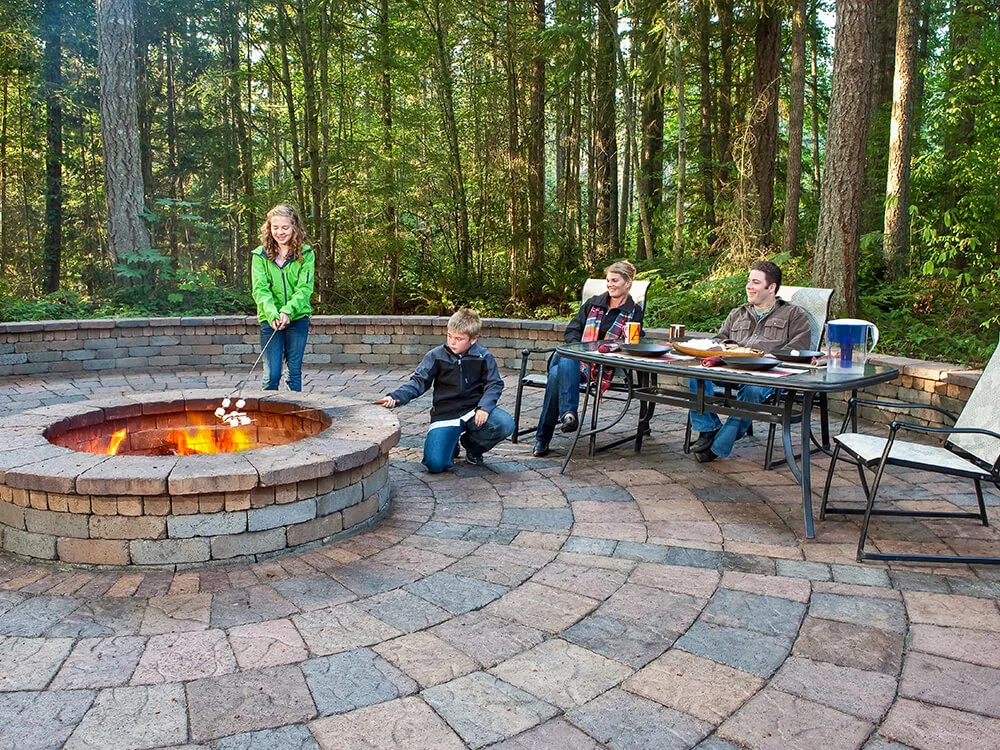
Classic circular fire pits never go out of style. Traditional designs create welcoming spaces that feel familiar and comfortable. Elements include:
Round fire pit bowls surrounded by brick or flagstone
Built-in seating walls that curve around the fire
Symmetrical layouts and balanced proportions
Luxury Outdoor Fire Pit Ideas
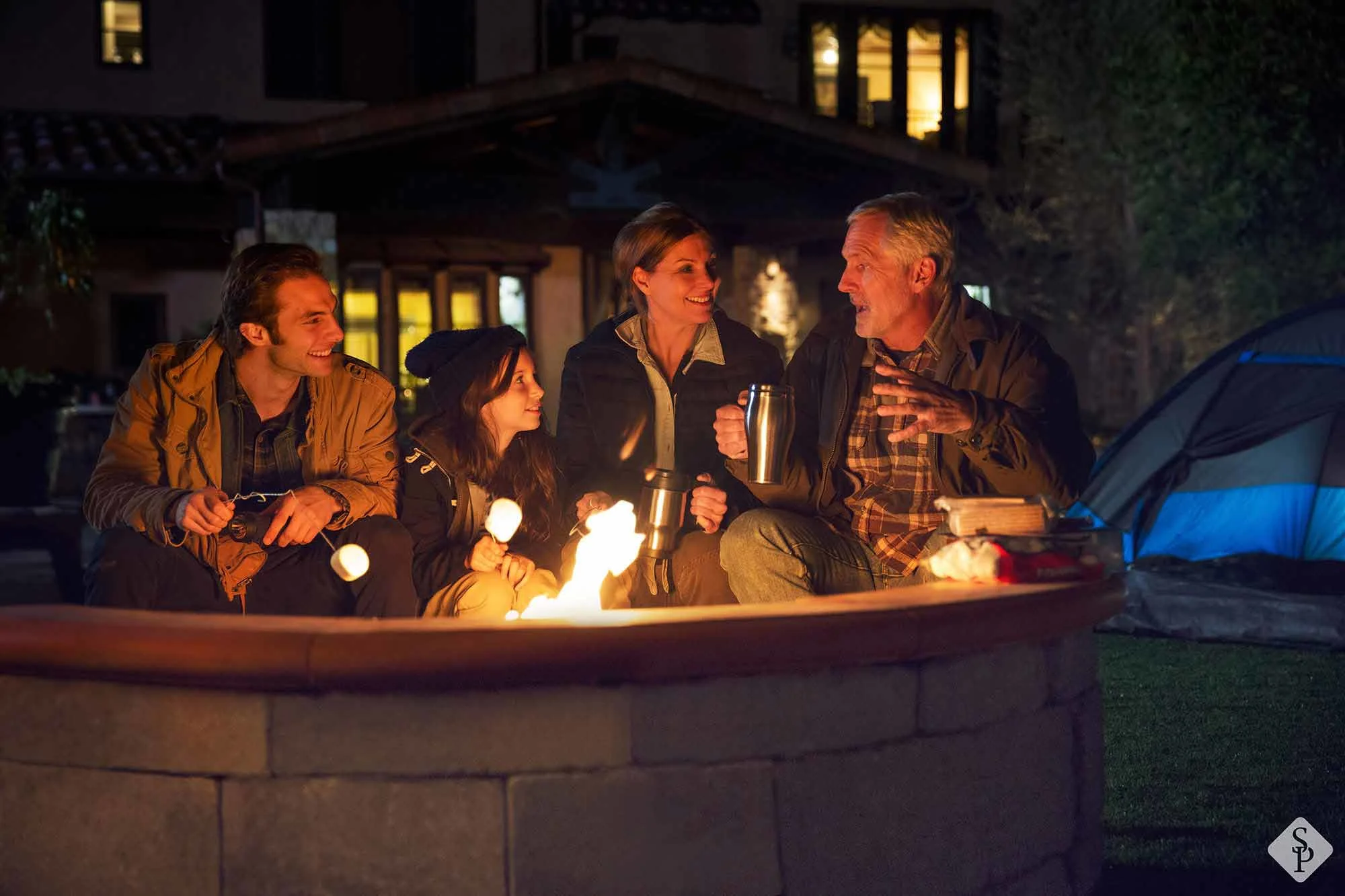
High-end fire pit installations combine automation, premium materials, and integrated features. Luxury designs often showcase:
• Remote-controlled gas systems that adjust flame height and heat output
• Custom outdoor lighting built into walls and steps
• Fire pits paired with an outdoor kitchen or BBQ island
• Pergolas, water features, or outdoor televisions nearby
Fire Pit Area Ideas for Differently Sized Backyards
Every yard can accommodate a fire pit as long as it’s designed to fit the available space.
Small Backyard Fire Pit Ideas
Compact yards require smart layouts that maximize every square foot. Small fire pit areas include:
• Corner placements that preserve open lawn or patio space
• Multi-functional elements like retaining walls that double as seating
• Integrated storage benches that hide cushions and firewood
Medium-Sized Backyard Fire Pit Ideas
Mid-sized yards offer flexibility to create distinct activity zones. Medium fire pit areas benefit from:
• Defined spaces that separate dining, lounging, and fire pit activities
• Curved seating walls that guide flow and create intimacy
• Patio pavers in contrasting patterns to frame the fire pit
• Stepping stone paths that connect different outdoor rooms or zones
Large Backyard Fire Pit Ideas
Expansive properties can accommodate grand fire pit installations. Large fire pit areas shine through:
• Circular layouts with generous seating
• Fire pits positioned as the central focal point
• Multiple entertaining zones
Dramatic landscape features, like pergolas or a statement outdoor fireplace that defines separate gathering zones

Outdoor Fire Pit Ideas by Shape and Layout
The shape of your fire pit influences both aesthetics and functionality.
Circular Fire Pits
Round fire pits create natural gathering spaces where everyone faces the center. Circular designs work both in traditional and rustic settings. They also work well with curved seating walls that encourage conversation among guests.
Square and Rectangular Fire Pits
Angular fire pits deliver contemporary style, aligning with modern architecture and geometric paver patterns. They fit neatly into corner installations and work well on narrow patios.
Sunken Fire Pit Areas
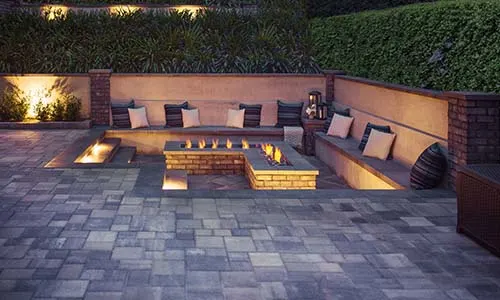
Sunken designs create cozy conversation pits that feel intimate and protected. The lowered elevation provides natural wind protection, keeping flames steady and guests comfortable. These installations require more excavation and planning but deliver dramatic visual impact.
Backyard Landscaping Ideas with a Fire Pit
Strategic landscaping transforms a simple fire pit into a complete outdoor experience, especially when paired with cohesive fire pit patio designs that tie together pavers, seating, and surrounding features. Here are some ideas:
Use pavers to anchor the fire pit area: Pavers create a stable, attractive foundation that defines your fire pit zone and prevents grass or soil from becoming compacted or damaged.
Incorporate retaining walls for seating: Retaining walls serve as both landscape features and functional seating for awinter gathering space. The walls can curve around the fire pit or create raised planters that frame the area.
Use plants, gravel, or lighting: These landscaping elements add color, texture, and ambiance to your fire pit.
Create visual flow: Clear pathways between your home, patio, and fire pit area make movement feel natural and intentional. Repeat paver colors or patterns throughout the yard to tie different zones together.

Fire Pit Safety, Placement, and Design Tips
Safety and compliance determine where and how you build your fire pit. Start by researching local fire codes and homeowner association rules. Many jurisdictions require specific clearances from structures, property lines, and overhead obstructions.
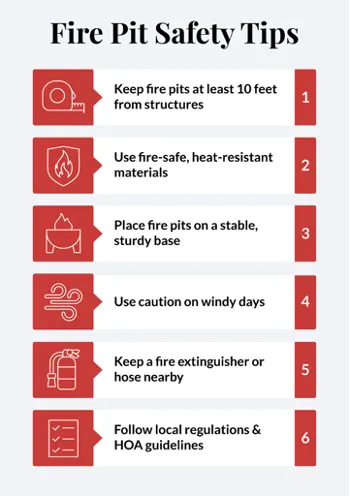
Follow these placement guidelines for safe, functional fire pits:
• Maintain at least 10 feet of clearance from buildings, fences, and trees
• Position fire pits away from low-hanging branches and power lines
• Avoid placing fire pits directly under roof overhangs or pergolas without proper ventilation
• Choose level ground or create a stable base that prevents tipping
Professional installation offers significant advantages. Experienced contractors understand drainage requirements, base preparation, and structural details. They pull necessary permits, ensure code compliance, and deliver finished projects backed by a warranty program. Professionals also coordinate electrical work for gas lines and lighting.
Why Professionally Designed Fire Pits Last Longer
Professional fire pit installations last longer due to expertise, materials, and attention to engineering details. Professionals will excavate to appropriate depths, compact base materials correctly, and ensure adequate drainage so water never pools around your fire pit.
Proper materials, such as high-quality pavers, cap stones, and polymeric sand help resist heat stress, protect walls from moisture infiltration, and resist weed growth. Professional designers also account for drainage slopes, hidden catch basins, and proper compaction so everything functions correctly for decades. They also customize designs for regional climates.
The result is a fire pit area that looks better and lasts longer than kit installations or amateur builds. Browse the project gallery to see examples of professionally designed fire pit installations.
Get the Right Fire Pit for Your Space
A well-designed fire pit area creates a natural gathering spot that enhances your property value and extends your outdoor living season. The right design works with your available space and complements your lifestyle.
Every successful fire pit installation starts with proper planning, quality materials, and expert craftsmanship that ensures your investment lasts for decades. System Pavers specializes in custom fire pit designs that combine professional installation with premium materials.
Contact us today to start planning your dream outdoor space.

Frequently Asked Questions
How much space do you need around a fire pit?
Most fire pits require at least 7 to 10 feet of clearance in all directions from combustible materials. Local fire codes often mandate specific distances, sometimes requiring up to 25 feet from buildings. The seating area itself needs an additional 3 to 4 feet of circulation space so guests can move comfortably around chairs or benches.
Can adding a fire pit increase my home’s value?
Yes, fire pits can add value to homes, especially in markets where outdoor living is popular. Quality hardscape improvements like professionally installed fire pit areas are desirable features that can boost a home’s value. The actual value increase depends on overall landscape quality, regional preferences, and how well the fire pit integrates with the rest of your outdoor space.
What materials are best for fire pits?
The best fire pit materials depend on your design style and fuel type. For wood-burning fire pits, natural stone, fire brick, and heavy-duty steel work well because they withstand high temperatures. Gas fire pits offer more flexibility and can incorporate concrete, porcelain pavers, and stainless steel. The surrounding patio area performs best with concrete pavers or natural stone that resists heat and stays stable through freeze-thaw cycles.